![side_logo.png]](/theme/site/shared/images/side_logo.png)
How TRIF is calculated
How the TRIF number on the dashboard is worked out from your closed investigations and hours worked over the last 365 days.
Try it free Start with Safety Evolution's Free version.
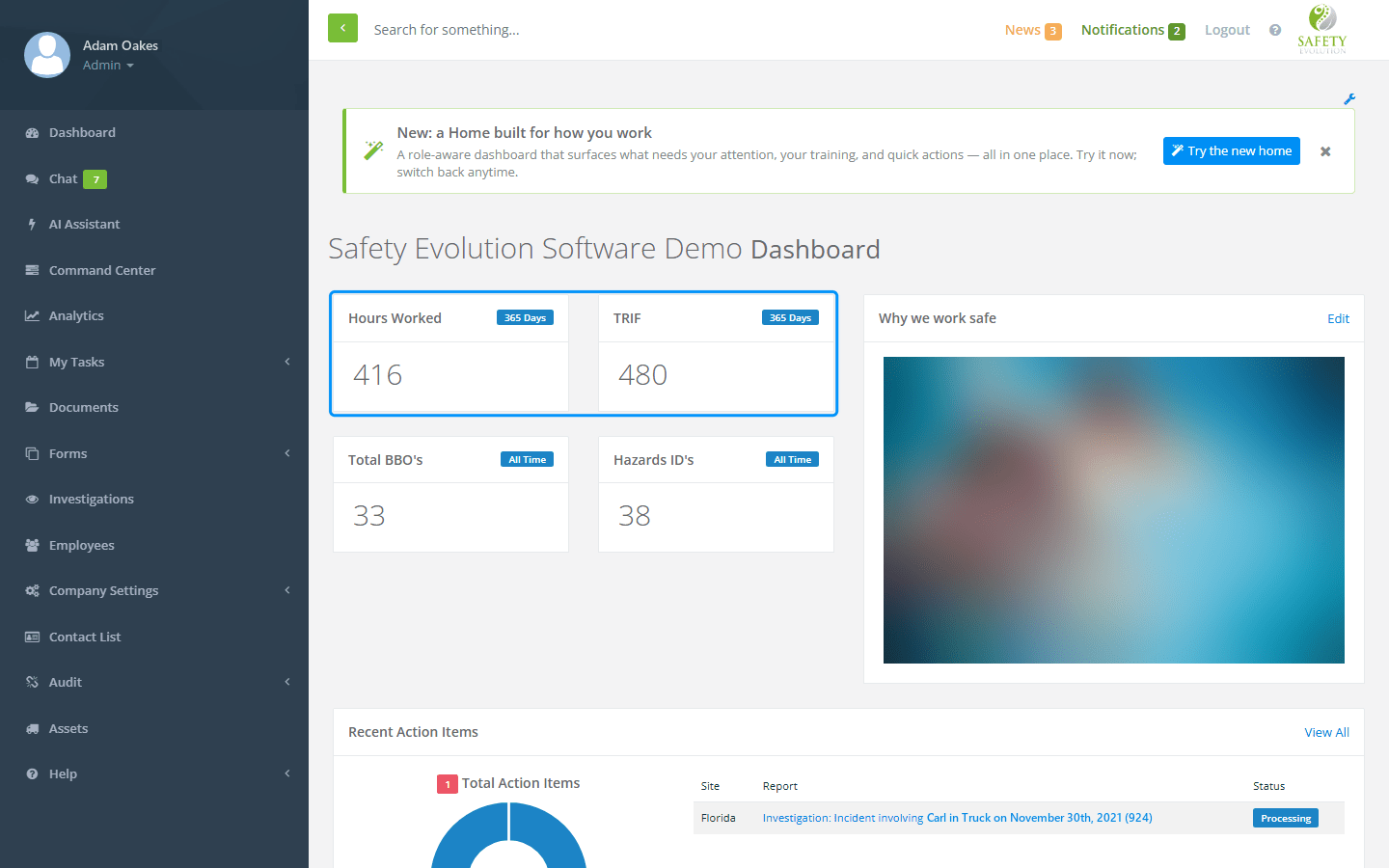
TRIF stands for Total Recordable Incident Frequency. It shows how many recordable injuries your company had for every 200,000 hours worked. The TRIF box on the dashboard works it out for you.
Where to see it
TRIF shows on the classic dashboard, next to Hours Worked. Both boxes are marked 365 Days. On the new Home, click Back to the old dashboard to see it.
The sum
TRIF = recordable injuries × 200,000 ÷ hours worked
Both numbers cover the last 365 days, counted back from today. If no hours are entered, TRIF shows 0.
What counts as a recordable injury
An investigation counts when all of these are true:
- It is closed. Its status is Completed.
- The incident happened in the last 365 days.
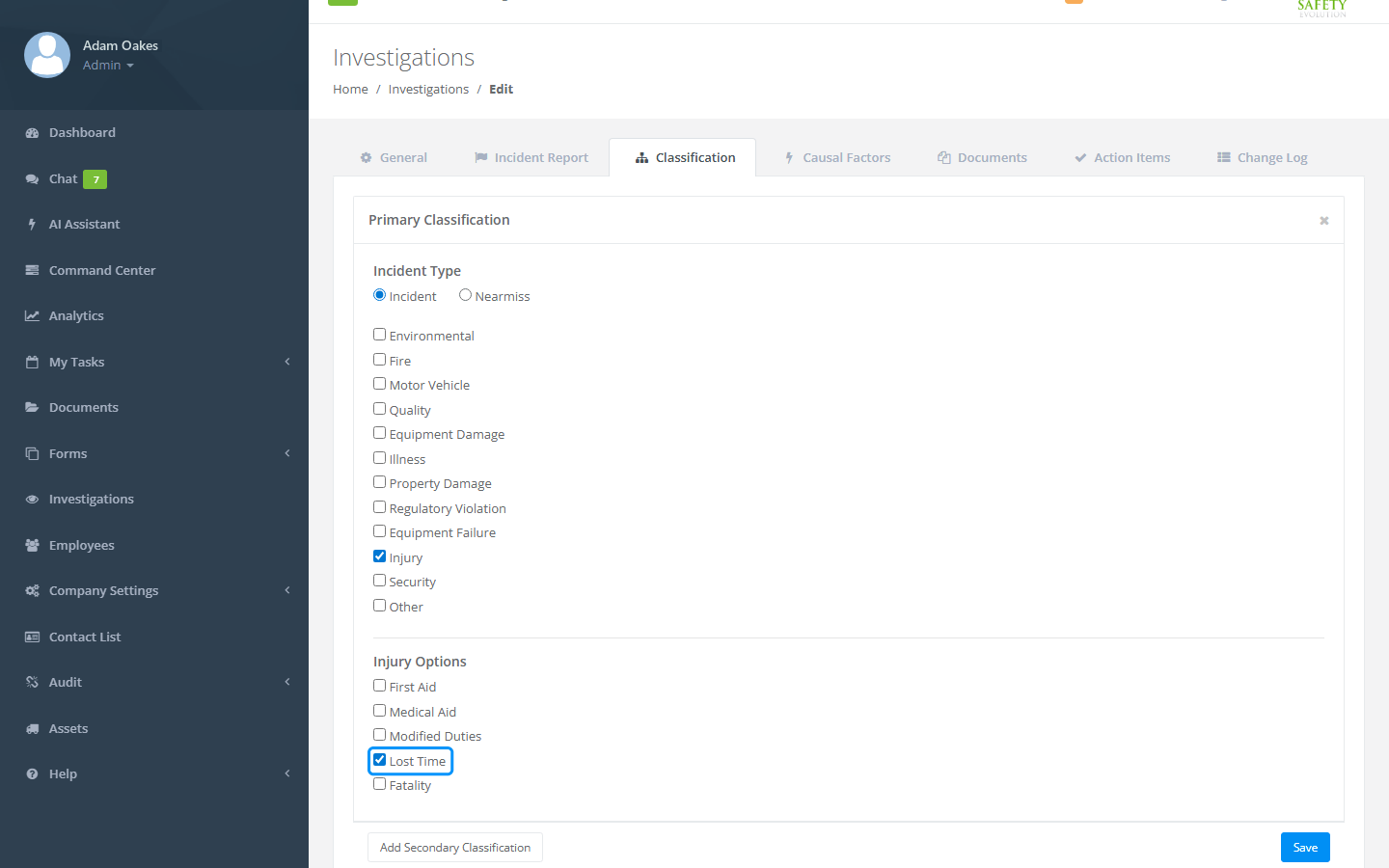
- On the Classification tab, the Incident Type is Incident, not Nearmiss.
- Injury is ticked in the primary or the secondary classification, with Medical Aid, Modified Duties, Lost Time or Fatality picked. First Aid alone does not count.
What counts as hours worked
All the hours your company has entered with a date in the last 365 days. See Add hours worked.
Example
Your company had 2 recordable injuries and worked 400,000 hours in the last 365 days. TRIF = 2 × 200,000 ÷ 400,000 = 1.
If the number looks wrong
- An injury is missing: the investigation may not be closed yet, may be a near miss, or may only have First Aid ticked.
- TRIF is very high or 0: check that your hours worked are up to date.
Updated October 24, 2026