Last updated: May 2026
If your crew says "that was close" but nobody writes it down, the job did not get lucky and move on. The job gave you a warning. A near miss is an unplanned event that did not cause injury, illness, property damage, or environmental harm, but had the real potential to do so.
⚡ Quick Answer
- What it is: A near miss is a close call where an event occurred and exposure was real.
- What it is not: A general hazard by itself is not a near miss until something happens.
- Why examples matter: Crews report more consistently when they can recognize common close calls in their own work.
- What to do next: Log the event, control the exposure, and decide whether it needs investigation or escalation.
What counts as a near miss?
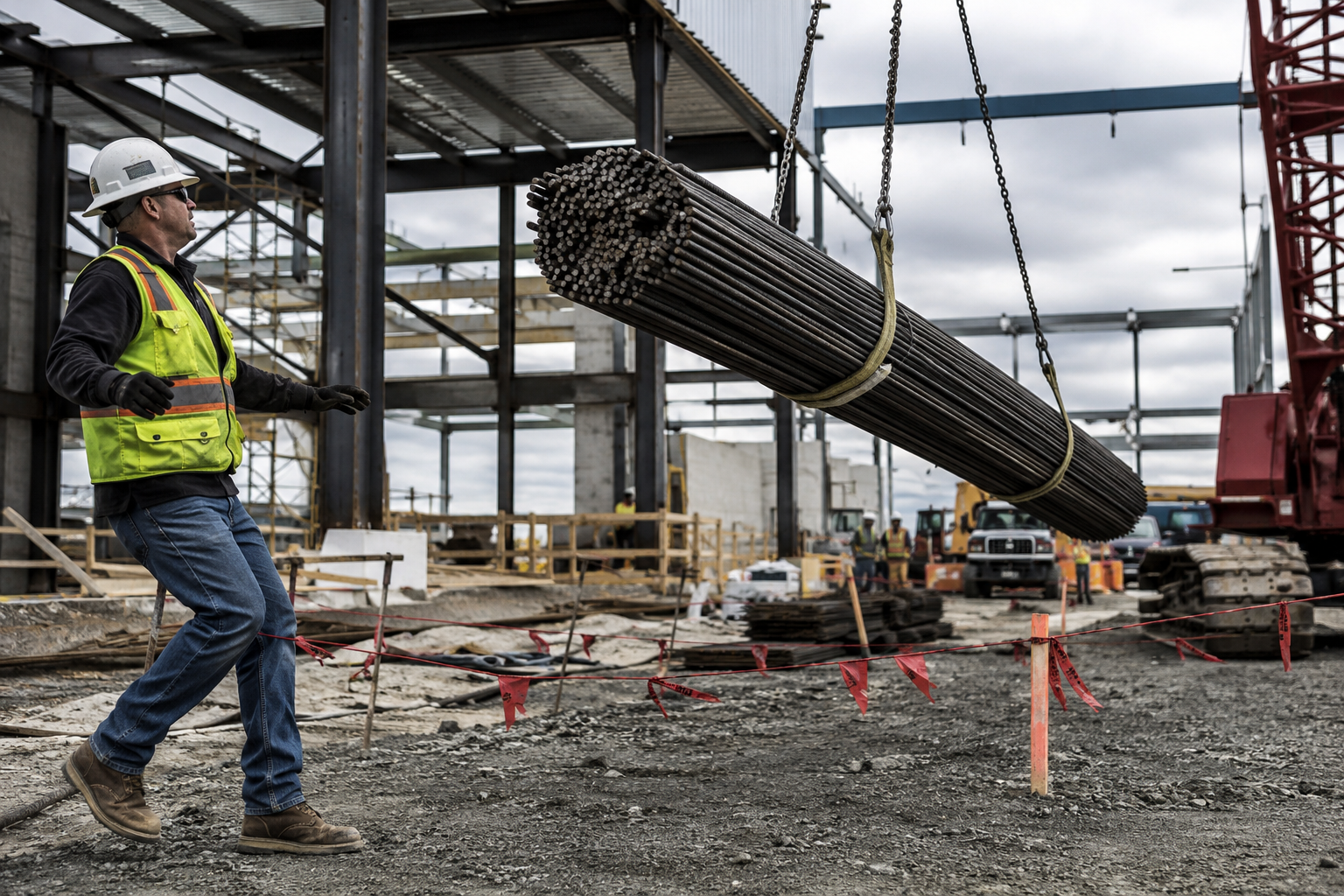
The cleanest test is simple: something happened, someone or something was exposed, and the result could reasonably have been worse. If a ladder is found loose before anyone climbs it, that is usually a hazard or unsafe condition. If the ladder shifts while a worker is on it and the worker catches themselves before falling, that is a near miss.
That distinction matters because crews often under-report anything that does not leave blood, broken gear, damaged equipment, or a work stoppage. The purpose of a strong reporting program is to capture the signal before the loss. If your team needs the full program overview, start with our near miss reporting guide. If the confusion is about classification, use the companion guides on near miss vs hazard and near miss vs incident.
20 near miss examples crews should recognize fast
These are the kinds of events that should not disappear into a quick joke or a verbal warning in the trailer. They are practical examples supervisors can use in toolbox talks, field coaching, and incident review meetings.
| Work area | Near miss example | What it may reveal |
|---|
| Mobile equipment | A backing truck stops just before contacting a pedestrian in a blind spot. | Traffic control, spotter communication, exclusion zones, or blind spot planning may be weak. |
| Lifting and rigging | A suspended load swings through an area where a worker was standing seconds earlier. | Lift planning, wind checks, tag line use, or line-of-fire controls may need correction. |
| Working at heights | A scaffold plank shifts under load but the worker regains footing. | Inspection, scaffold setup, housekeeping, or fall protection planning may be incomplete. |
| Dropped objects | A tool falls from a ladder and lands beside a worker below. | Tool tethering, barricades, storage, or overhead work controls may be missing. |
| Housekeeping | A worker slips on mud, ice, or oil and catches themselves on a handrail. | Walking surface controls, footwear, drainage, or spill response may need attention. |
| Energy isolation | A machine starts unexpectedly during setup but the worker is clear of the moving part. | Lockout, communication, verification, or control of hazardous energy may have failed. |
| Electrical work | A worker opens a panel and sees sparking, then steps back before contact. | Pre-job verification, condition of equipment, PPE, or qualified-person controls may need review. |
| Excavation | A trench edge sloughs off while a worker is nearby but nobody is buried. | Soil assessment, shoring, spoil pile placement, or access controls may be inadequate. |
| Pinch points | A glove or sleeve is caught briefly in a closing point but the worker pulls free. | Guarding, hand placement, spacing, or task sequencing may need correction. |
| Chemicals | A fitting leaks onto PPE instead of skin or eyes. | Inspection, labeling, containment, or emergency equipment readiness may be weak. |
| Driving | A field vehicle slides on ice and stops before entering traffic. | Journey management, route planning, speed, or weather controls may need review. |
| Material storage | Stacked material shifts and almost falls into a walkway. | Stacking limits, restraints, housekeeping, or inspection routines may be insufficient. |
Still relying on memory after close calls?
If near misses live in text messages, notebooks, or verbal updates, patterns disappear fast. Start your 30-day free trial and make reporting easier for supervisors and crews in the field.
Start Your 30-Day Free Trial →
Examples by industry
Construction near miss examples
Construction sites generate a lot of near misses because conditions change quickly. A delivery truck enters an active work zone without a spotter. A worker trips over temporary power cords. A load swings outside the planned lift path. A guardrail is removed for access and not replaced before another crew arrives. None of those events needs an injury to be worth reporting.
Manufacturing and shop examples
In shops and plants, near misses often involve energy, movement, and routine work that has become too familiar. A machine cycles unexpectedly. A forklift enters an aisle before eye contact is made. A pallet collapses while being moved. A worker reaches across a pinch point and pulls back before contact. These events are valuable because they show where routine has started to replace procedure.
Field service and transportation examples
Field crews work in less controlled environments, so weather, road exposure, customers, and uneven ground can all create close calls. A technician steps off a truck and slips on ice. A service vehicle backs toward a ditch before the driver corrects. A worker lifts a heavy item alone and feels it start to shift. These examples should feed into planning, vehicle checks, pre-job hazard assessments, and route decisions.
What each example should trigger
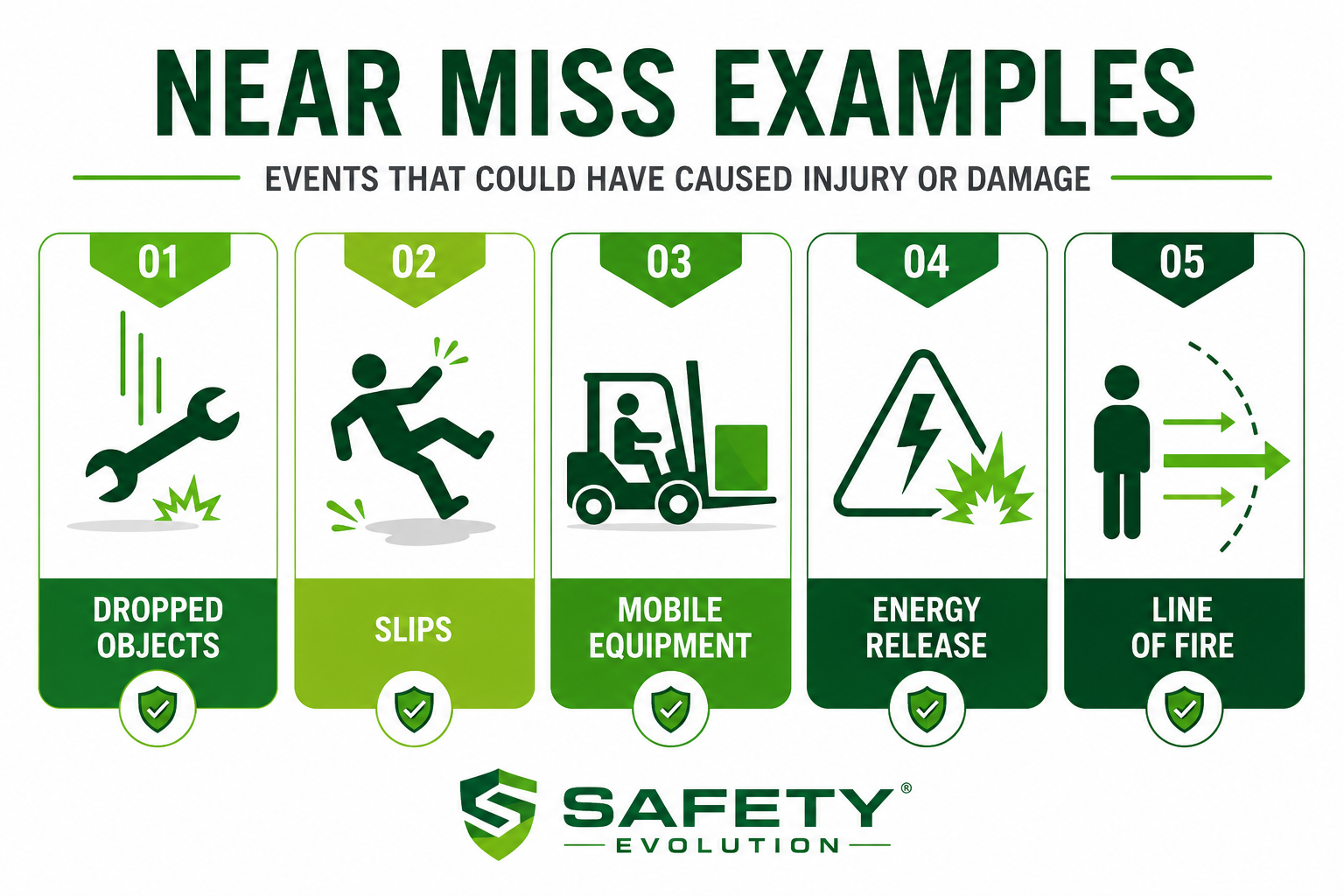
Not every near miss needs the same response, but every real near miss needs some response. At minimum, make the scene safe, capture the facts, identify the failed or missing control, and assign follow-up to one owner. If the event had serious injury potential, use a more formal process like the one in our near miss investigation guide or escalate it using the high-potential near miss criteria.
The value is not the story itself. The value is the control weakness the story exposes. A dropped wrench is not just a dropped wrench. It may point to missing tool tethers, poor barricading, rushed staging, or a crew that does not understand overhead work exposure. A vehicle close call is not only about the driver. It may point to layout, signage, spotter expectations, lighting, or radio communication.
What should go into the report?
For each example, the report should be short but useful. Capture what happened, where it happened, who was involved or exposed, what harm could have occurred, what immediate action was taken, and what corrective action is needed. The report should not read like a blame statement. It should help the organization learn. For a field-ready structure, use the near miss report template and workflow.
Events crews fail to report all the time
The most commonly missed near misses are the ones workers self-correct. They catch themselves before a fall. They step back from a reversing unit. They hear the spotter late and move. They stop a task because something feels wrong. Then the job keeps going, and no one wants to slow production down for paperwork.
This is why reporting culture matters. Crews do not hide near misses because they hate safety. They hide them because the process often feels slow, punitive, or pointless. If you want better reporting, the form has to be simple, the follow-up has to be timely, and the crew has to see that reporting changes something. That is the focus of our guide to building a near miss reporting culture.
How to use these examples in training
Examples work best when supervisors connect them to the work happening that day. Do not ask, "Has anyone seen a near miss?" and wait in silence. Use a specific scenario: "Yesterday a tool fell from height and missed someone. Where could that happen on our job today?" That style of question makes the conversation practical and reduces the fear that reporting is only about getting someone in trouble.
For a quick crew discussion, pair these examples with the near miss toolbox talk or the broader toolbox talks guide. For management review, connect the reports to your near miss KPIs so leaders can see patterns by crew, task, location, and hazard type.
Want better near miss reporting without more admin drag?
When reporting is clunky, supervisors skip it and crews stop believing it matters. Use Safety Evolution to capture close calls, assign follow-up, and keep the learning visible.
Start Your 30-Day Free Trial →
Frequently Asked Questions
What is an example of a near miss in construction?
A dropped object that lands beside a worker, a reversing truck that stops before contact, a scaffold slip where the worker catches themselves, or a suspended load that swings through an occupied area are common construction near misses.
Is a slip without injury a near miss?
Yes, if the slip involved real exposure and could reasonably have led to injury, it should be treated as a near miss even if the worker stayed upright.
What is the difference between a near miss and a hazard?
A hazard is a source or condition with potential to cause harm. A near miss is an event where that potential almost became an actual injury, damage, or loss.
Should near misses with no damage still be reported?
Yes. No injury and no damage does not mean there was no problem. The report helps the team find and correct the weak control before the next event has a worse outcome.