Last updated: May 2026
Some near misses are minor learning opportunities. Others are warnings that the organization came very close to a life-altering event. A high-potential near miss is a close call where the actual outcome was harmless, but the credible outcome could have been serious injury, fatality, major property damage, environmental release, or a major operational loss.
⚡ Quick Answer
- High potential means credible severity: Do not judge only by what happened. Judge by what could realistically have happened.
- Escalate serious exposures: Falls, line-of-fire events, mobile equipment, energy release, confined space, and suspended loads often deserve higher review.
- Investigate deeper: High-potential near misses should usually trigger a formal investigation and leadership visibility.
- Track separately: A high-potential metric helps leaders focus on serious risk instead of only report volume.
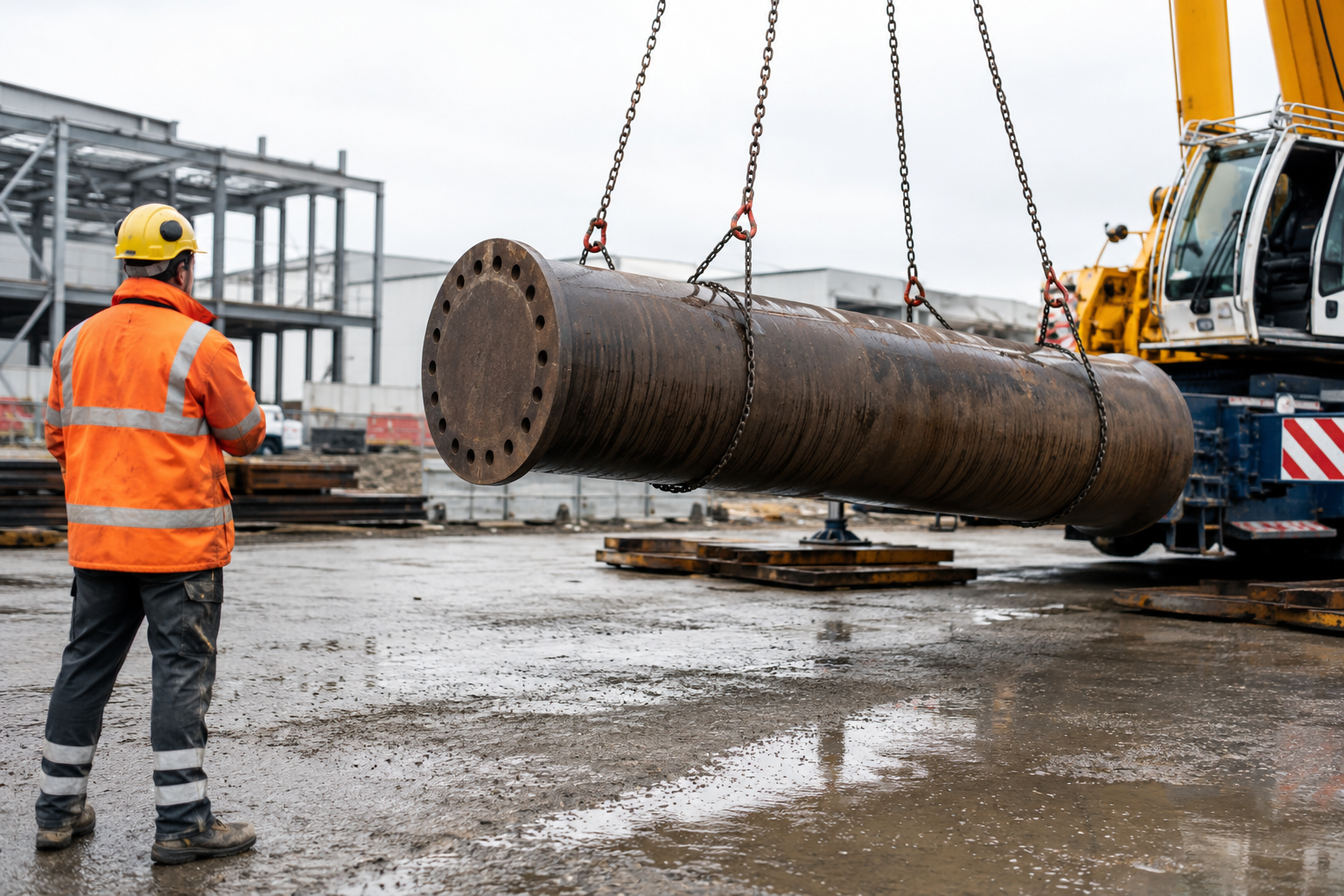
What makes a near miss high potential?
A near miss becomes high potential when the credible consequence is severe. The word credible is important. The question is not "could anything in the universe have gone worse?" The question is, "given the energy, exposure, task, and controls, could this reasonably have caused a serious outcome?"
For example, a tool dropping six inches onto a bench may be a low-potential near miss. A tool dropping from a scaffold and landing beside a worker below may be high potential. A vehicle bumping a cone may be minor. A reversing truck stopping inches from a pedestrian in a blind spot may be high potential. For broader reporting context, see the near miss reporting guide.
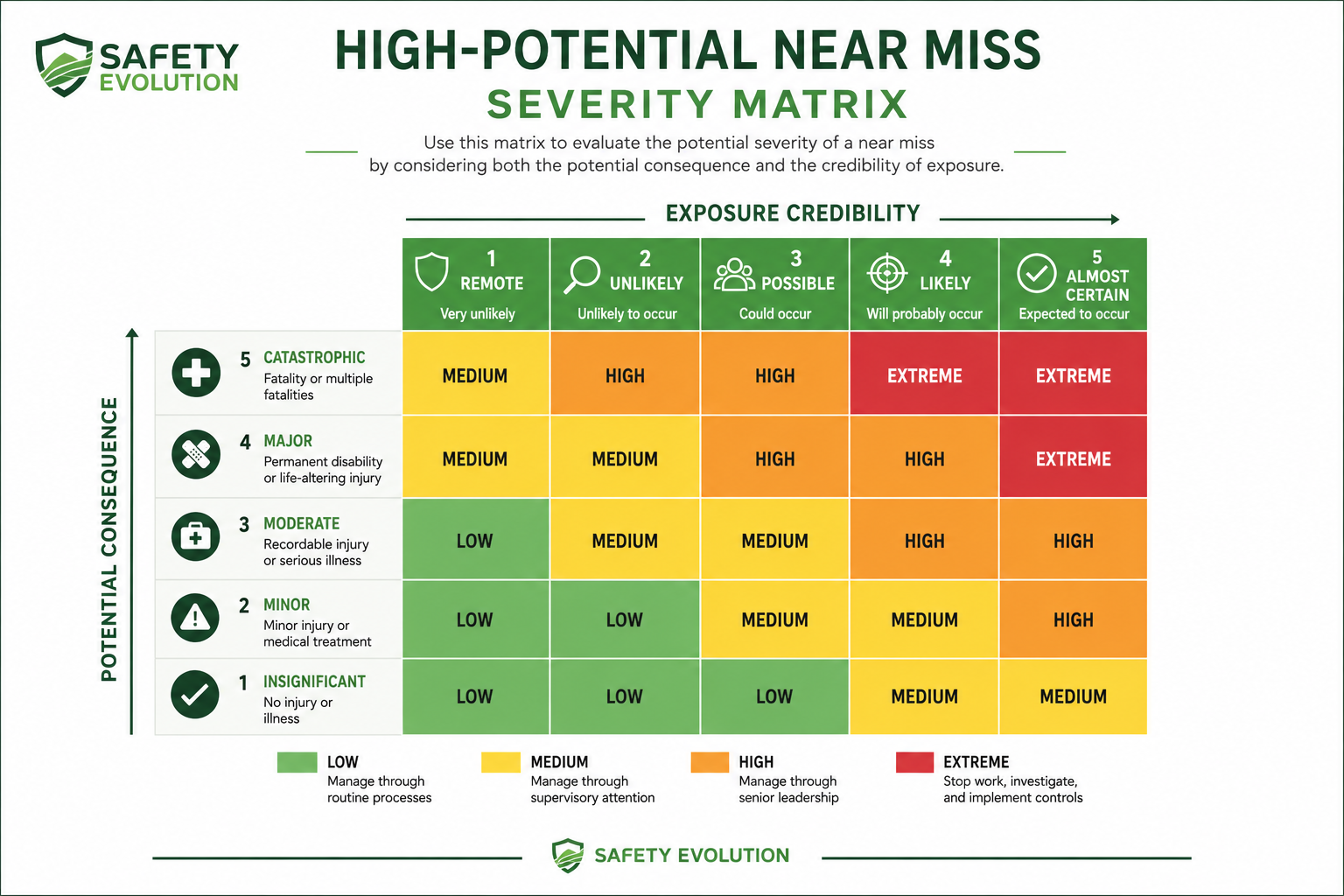
High-potential near miss decision matrix
| Question | Low or moderate potential | High potential signal |
|---|
| What energy was involved? | Low energy, low height, low speed, limited exposure. | High energy, height, pressure, electricity, moving equipment, suspended load, stored energy. |
| How close was the exposure? | Exposure was indirect or unlikely to contact a person. | Person was in the line of fire, fall zone, swing radius, traffic path, or release area. |
| What prevented the loss? | A planned control worked as designed. | Luck, last-second reaction, chance timing, or unplanned intervention prevented harm. |
| Could the event repeat? | Unusual one-off with clear correction. | Task, layout, equipment, or behavior could repeat at the same or other sites. |
| What could have happened? | Minor first aid, minor damage, limited disruption. | Fatality, permanent injury, hospitalization, major damage, major release, or regulatory impact. |
Still relying on memory after close calls?
If near misses live in text messages, notebooks, or verbal updates, patterns disappear fast. Start your 30-day free trial and make reporting easier for supervisors and crews in the field.
Start Your 30-Day Free Trial →
Examples of high-potential near misses
- A worker steps into the path of reversing equipment and moves away just before contact.
- A suspended load swings outside the exclusion zone and passes near a worker.
- A fall protection anchor or lanyard issue is discovered after a worker was exposed at height.
- A trench wall sloughs while workers are nearby but no one is trapped.
- A machine starts unexpectedly during maintenance while the worker is clear of the point of operation.
- A pressurized hose or fitting fails and releases energy away from the worker.
- An energized component is discovered during work that was expected to be de-energized.
- A confined-space atmospheric concern is caught before entry or during entry without harm.
For more general examples, use the near miss examples at work page. For classification between hazards, near misses, and incidents, use near miss vs hazard and near miss vs incident.
Why high-potential near misses need a different response
If every near miss goes through the same workflow, serious warnings can get buried beside minor observations. A high-potential near miss deserves more attention because the organization received a rare chance to learn before the worst-case outcome happened.
That does not mean the response should be punitive. It means the event should be visible to the right people, investigated with enough depth, and closed with controls strong enough to match the potential severity. In many organizations, high-potential events are reviewed by senior operations, safety leadership, and the site manager because they may reveal risk beyond one crew.
Escalation workflow
- Stop and make safe. Control the exposure immediately.
- Classify the potential. Use the credible worst outcome, not the actual no-loss result.
- Notify the right people. Escalate to the supervisor, safety lead, site manager, or leadership based on severity.
- Start a formal investigation. Use the process in the near miss investigation guide.
- Assign interim controls. Do not wait for the final report if workers remain exposed.
- Identify system causes. Look at planning, supervision, equipment, communication, and work pressure.
- Verify corrective actions. High-potential events should not close on verbal reminders alone.
- Share the learning. If one site could have the same exposure, other sites need to know.
How to avoid over-escalating everything
If everything is high potential, nothing is. The category should be reserved for events where serious harm was credible. Overuse creates noise, drains management attention, and makes crews skeptical. Underuse is worse because serious risk stays invisible. The balance comes from agreed criteria, supervisor coaching, and regular review of classifications.
One practical approach is to have workers submit the report quickly, then allow a safety lead or supervisor to confirm the high-potential classification. That keeps the intake simple while improving consistency.
Corrective action expectations
High-potential near misses often need stronger controls than low-risk close calls. A toolbox talk may support the response, but it should not be the only response when the credible outcome includes fatality or serious injury. Consider engineering controls, barriers, procedure changes, lift plan changes, traffic separation, equipment repairs, lockout verification, inspection frequency, or supervisor approval steps.
Corrective action should have an owner, due date, evidence of completion, and verification. For the form structure, use the near miss report template. For leadership tracking, use the near miss KPI guide.
What leaders should ask after a high-potential near miss
- Could the same exposure exist at another site, crew, or job phase?
- Was the control missing, weak, bypassed, or not understood?
- Did work pressure or schedule pressure influence the event?
- Would the current pre-job hazard assessment catch this next time?
- Do supervisors have authority to stop the task when this exposure appears?
- What action would make the next event physically less likely?
How high-potential near misses support safety culture
Workers pay attention to how leaders respond to serious close calls. If leaders blame the person closest to the event, reporting will drop. If leaders treat the report as a chance to fix weak controls, reporting will improve. A good response says, "Thank you for reporting this. Now let us make sure it cannot hurt someone next time."
That is why the high-potential workflow should connect to a near miss reporting culture that rewards early warning, not silence.
How to communicate a high-potential near miss
Communication should be factual, fast, and constructive. Share what happened, what could have happened, which controls are being strengthened, and what crews should do differently. Avoid naming and shaming. The message should make the risk visible without making workers afraid to report the next serious close call.
A good communication might say: "A worker was nearly struck during equipment movement in the yard. We found that stacked material blocked the operator's view and the pedestrian route was unclear. We changed the traffic layout, added signage, and reviewed spotter expectations with crews." That is specific enough to teach without turning the event into gossip.
Want better near miss reporting without more admin drag?
When reporting is clunky, supervisors skip it and crews stop believing it matters. Use Safety Evolution to capture close calls, assign follow-up, and keep the learning visible.
Start Your 30-Day Free Trial →
Frequently Asked Questions
What is a high-potential near miss?
It is a close call where no injury or damage occurred, but the credible outcome could have been serious injury, fatality, major damage, environmental release, or significant operational loss.
Should high-potential near misses be investigated?
Yes. They usually deserve a deeper investigation than low-potential near misses because the credible consequence is more severe.
Who should be notified about a high-potential near miss?
At minimum, the supervisor and safety lead should be notified. Depending on the potential severity, site management or senior leadership may also need visibility.
How do you track high-potential near misses?
Track them separately from total near miss volume so leaders can focus on serious risk, repeat exposure, investigation quality, and corrective action closeout.