Last updated: May 2026
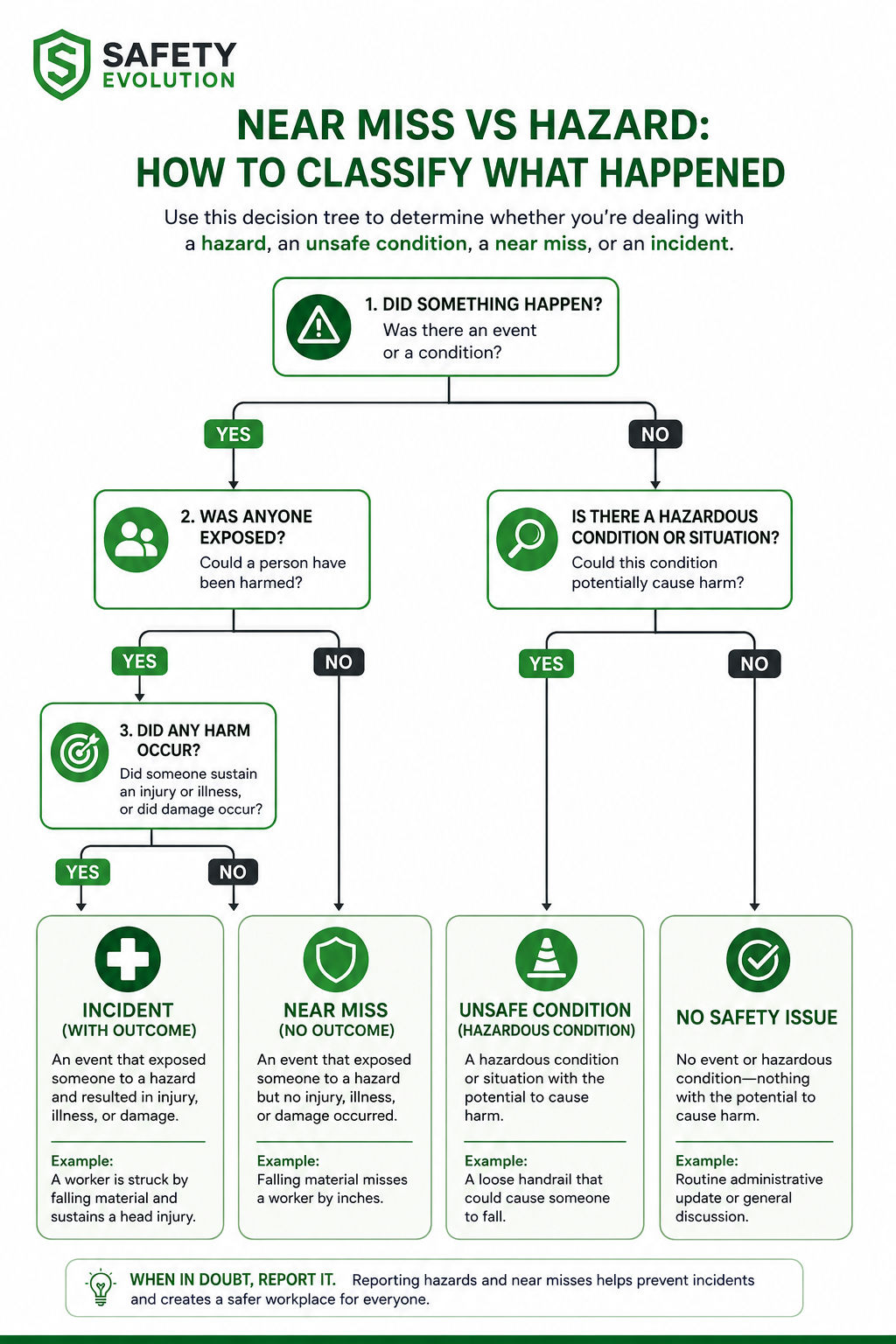
The difference between a near miss and an incident comes down to outcome. A near miss had the potential to cause harm but did not. An incident resulted in injury, illness, damage, environmental impact, or another loss. Both matter, but they do not follow the same workflow.
Quick Answer
- Near miss: A close call with no injury, damage, or loss.
- Incident: An event where injury, illness, damage, release, or other loss occurred.
- Why it matters: Classification affects reporting, investigation, recordkeeping review, and corrective action.
- Best practice: Treat near misses as early warnings, not as non-events.
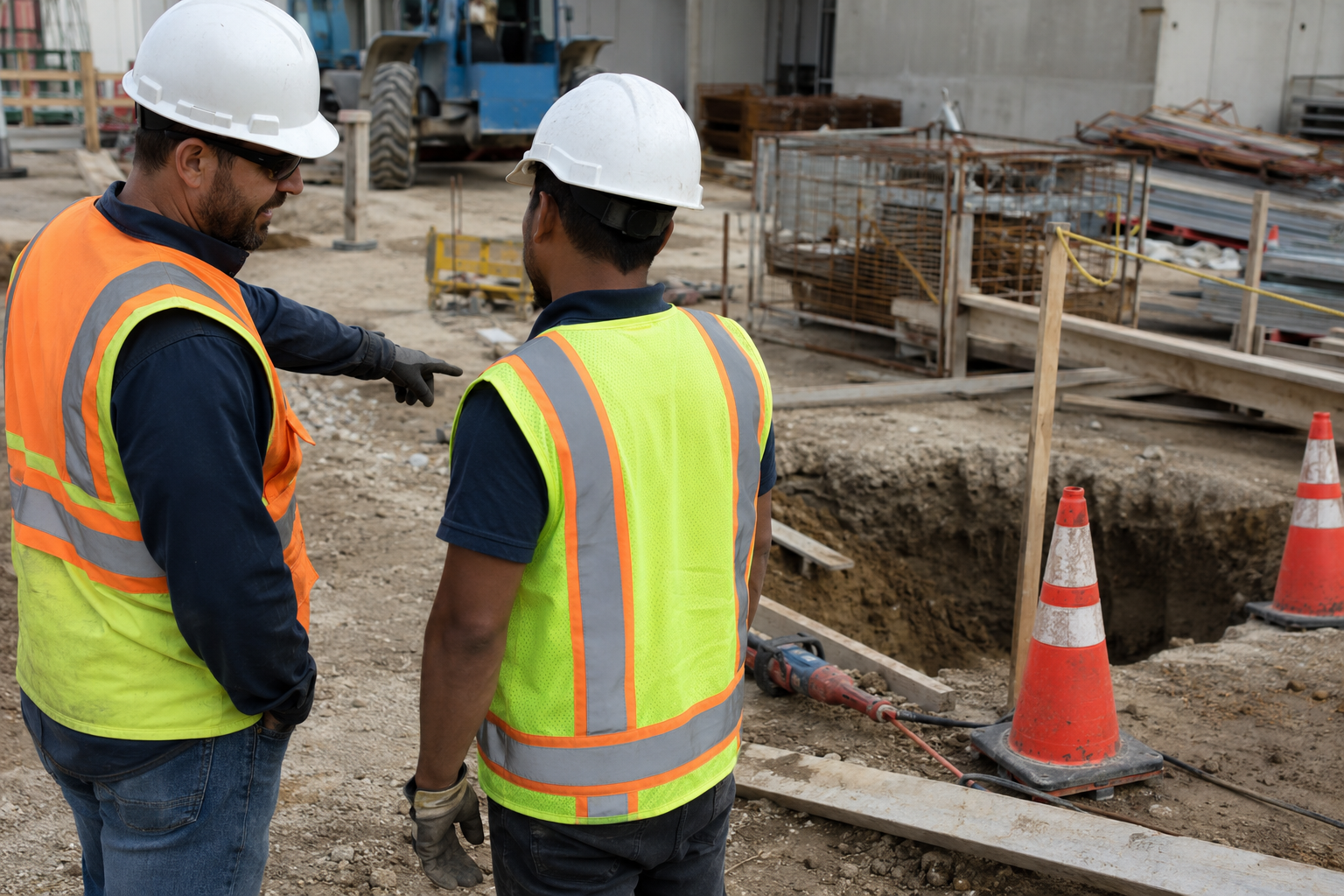
Near miss vs incident: the simple comparison
| Question |
Near miss |
Incident |
| Did something happen? |
Yes. |
Yes. |
| Was anyone or anything exposed? |
Yes. |
Yes. |
| Was there injury, damage, illness, release, or loss? |
No. |
Yes. |
| Is follow-up needed? |
Yes, based on potential and repeat risk. |
Yes, based on actual outcome and applicable requirements. |
| What is the purpose of reporting? |
Prevent the loss before it happens. |
Respond to the loss and prevent recurrence. |
For a full reporting program, use the near miss reporting guide. For hazards that have not yet become events, use near miss vs hazard.
Still relying on memory after close calls?
If near misses live in text messages, notebooks, or verbal updates, patterns disappear fast. Start your 30-day free trial and make reporting easier for supervisors and crews in the field.
Start Your 30-Day Free Trial →
Examples of near misses and incidents
Near miss: A hammer falls from a scaffold and lands beside a worker. Incident: The hammer hits the worker and causes injury.
Near miss: A forklift stops just before striking a pedestrian. Incident: The forklift strikes the pedestrian, damages material, or causes injury.
Near miss: A worker slips on ice and catches themselves. Incident: The worker falls and is injured.
Near miss: A hose fails and releases away from workers. Incident: The release contacts a worker, damages equipment, or causes environmental impact.
For a larger list of close calls by work type, see near miss examples at work.
Why the distinction matters
Near misses and incidents both reveal weaknesses, but they create different obligations and different levels of urgency. Incidents may require medical response, incident reporting, regulatory review, insurance documentation, or formal investigation. Near misses usually begin as internal prevention events, but high-potential near misses can still require leadership attention and formal investigation.
The distinction also affects metrics. If near misses and incidents are mixed together, leaders cannot tell whether the organization is catching risk early or only reacting after loss. Clean classification helps safety managers compare leading and lagging indicators.
When a near miss becomes an incident
A near miss becomes an incident when there is an actual unwanted outcome. That outcome may be injury, illness, property damage, equipment damage, environmental release, production disruption, or another defined loss. The amount of damage or injury can affect the next steps, but the presence of loss is what moves the event out of near miss territory.
Some events are not obvious at first. A worker may say they are fine after a slip but later report pain. Equipment may look undamaged but fail inspection. A release may appear contained but require cleanup. When the actual outcome changes, the classification may need to be updated.
How supervisors should classify events
- Start with the facts. What happened and what was exposed?
- Identify the actual outcome. Was there injury, damage, illness, release, or loss?
- Identify the credible potential outcome. Could it have been serious?
- Choose the initial classification. Hazard, near miss, high-potential near miss, or incident.
- Escalate uncertainty. If recordkeeping, reporting, or legal requirements might apply, involve the safety lead.
Near miss and incident reporting forms
Some companies use one intake form for hazards, near misses, and incidents, then route the event based on classification. Others use separate forms. Either approach can work if the workflow is clear. The important point is that workers should not have to understand every classification rule before they report. They should submit the event quickly, and the supervisor or safety team should confirm the final classification.
Use the near miss report template for no-loss events, and make sure your incident process includes the additional steps required for injury, damage, or regulatory review.
Near miss investigations versus incident investigations
A near miss investigation focuses on what almost happened and why controls did not fully prevent exposure. An incident investigation also includes the actual consequences and any required response. The root cause questions can be similar, but the urgency, documentation, and external requirements may differ.
High-potential near misses should often be investigated almost as seriously as incidents because the credible outcome was severe. Use the near miss investigation guide and the high-potential near miss page to define that threshold.
Common mistakes
- Calling a near miss nothing. A no-loss outcome can still reveal a serious failed control.
- Calling every incident a near miss because injury was minor. If there was injury or damage, it is no longer a pure near miss.
- Ignoring potential severity. A no-injury close call can still be high potential.
- Using classification to assign blame. Classification should support routing and prevention.
- Not updating the classification. If new information shows injury or damage, update the record.
How classification supports culture and KPIs
Workers are more likely to report when they understand what each category means and trust the response. Clear definitions reduce hesitation. Better classification also improves near miss KPIs because dashboards show the difference between early warnings and loss events.
For adoption, combine this page with a short supervisor briefing and the near miss toolbox talk. The goal is not to make crews experts in terminology. The goal is to help them report quickly and accurately.
How this affects Canada and US workflows
The difference between a near miss and an incident matters in both Canada and the US, but the legal workflow after classification can differ. In the US, OSHA recordkeeping and reporting rules focus on specific injuries, illnesses, and severe events. In Canada, reporting and investigation requirements depend on federal, provincial, or territorial jurisdiction. Do not mix the two systems in one decision.
Use the market-specific pages when needed: near miss reporting in Canada and near miss reporting to OSHA.
Practical rule for frontline teams
Frontline workers should not delay reporting because they are unsure of the perfect label. They should report what happened quickly. Supervisors and safety leads can confirm whether the event is a hazard, near miss, high-potential near miss, or incident. This keeps the process fast and reduces the chance that important details are lost.
Want better near miss reporting without more admin drag?
When reporting is clunky, supervisors skip it and crews stop believing it matters. Use Safety Evolution to capture close calls, assign follow-up, and keep the learning visible.
Start Your 30-Day Free Trial →
Frequently Asked Questions
What is the difference between a near miss and an incident?
A near miss is an event with potential for harm but no actual injury, damage, or loss. An incident includes an actual unwanted outcome such as injury, illness, damage, release, or loss.
Can a near miss become an incident later?
Yes. If new information shows that injury, damage, illness, or loss occurred, the classification should be updated.
Should near misses be investigated like incidents?
Some should be. High-potential or repeated near misses may deserve a formal investigation even though no one was hurt.
Why should near misses be reported if they are not incidents?
Near misses reveal weak controls before injury or damage occurs. Reporting them helps the organization prevent future incidents.
Get Weekly Safety Insights
Regulation updates, toolbox talk ideas, and compliance tips. One email per week.