Health & Safety Program
Ultimate Guide to Near Miss Reporting
Learn how to build a near miss reporting system with a 7-step workflow, KPI model, and Canada vs US compliance guidance.
Learn how near miss reporting works in Canada, including internal reporting, provincial differences, and practical employer workflows.
Last updated: May 2026
In Canada, the safest answer is this: near misses should be reported internally and investigated when they reveal risk, but external reporting duties depend on jurisdiction, industry, and the nature of the event. Canada does not have one single workplace safety rule that applies the same way to every employer in every province and territory.
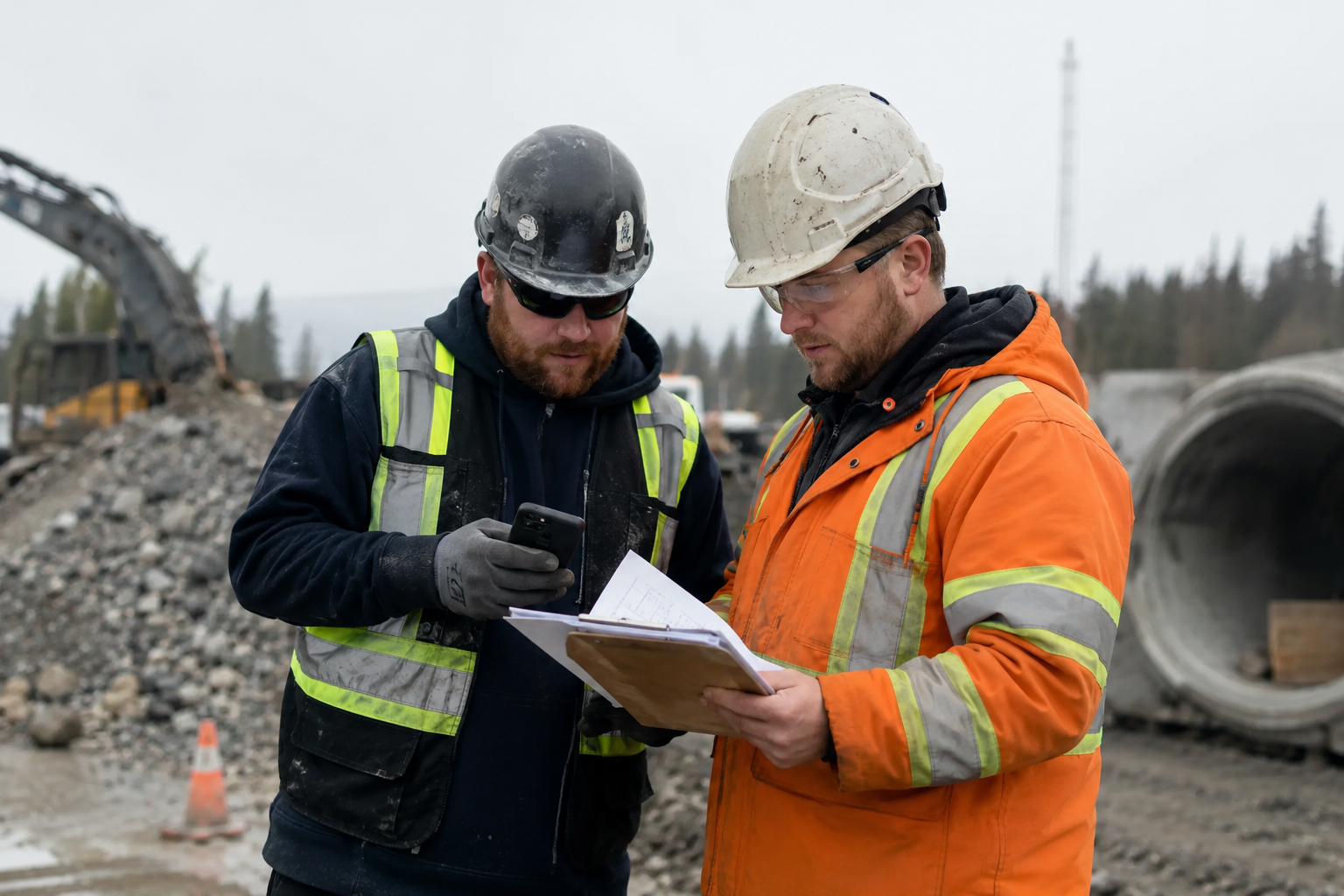
Canadian employers should not wait for an injury before they capture close calls. CCOHS describes near-miss reporting and investigation as good practice because these events help identify improvement opportunities when no injury or damage occurred. That makes near miss reporting a prevention tool, not just a compliance exercise.
At the same time, legal duties in Canada are jurisdiction-specific. A construction employer in Alberta, a federally regulated transportation employer, and a contractor working in British Columbia may have different reporting, investigation, committee, and record-retention requirements. This page is a practical overview, not legal advice. Always check the rule that applies to your workplace and industry.
For the general program structure, use the near miss reporting guide. For the US-specific version, use near miss reporting to OSHA instead.
| Question | Internal process | External or regulator process |
|---|---|---|
| Who receives it? | Supervisor, safety manager, joint health and safety committee where applicable, operations leadership. | Provincial, territorial, or federal regulator when the legal threshold is met. |
| What triggers it? | Any close call with credible exposure or learning value. | Specific legal criteria such as serious injury, dangerous occurrence, major release, fatality, or other defined event. |
| Why do it? | Prevent recurrence, identify hazards, assign corrective action, and improve reporting culture. | Meet legal duties for reportable events and required investigations. |
| How fast? | As soon as practical, ideally immediately after making the area safe. | Depends on the applicable legislation and event type. |
Still relying on memory after close calls?
If near misses live in text messages, notebooks, or verbal updates, patterns disappear fast. Start your 30-day free trial and make reporting easier for supervisors and crews in the field.
Start Your 30-Day Free Trial →Even when a near miss does not trigger external reporting, it can still reveal a serious control failure. A worker almost struck by equipment, a trench edge sloughing near a worker, a dropped object landing beside someone, or an energy-isolation failure with no injury should not be treated as a lucky break. It should be treated as information.
Internal reporting allows the employer to correct the condition, document the response, involve the right people, and look for repeat patterns. It also gives supervisors a structured way to respond without waiting for an injury to justify action. For examples that help crews recognize reportable close calls, use near miss examples at work.
Canada has federal, provincial, and territorial occupational health and safety regimes. Some workplaces are federally regulated, while most are regulated by the province or territory where the work is performed. The words used in legislation may also differ. One jurisdiction may refer to accidents, incidents, dangerous occurrences, hazardous occurrences, serious injuries, or near misses in different ways.
That is why a clean Canadian near miss process should separate two questions. First: should we capture and learn from this internally? In most practical safety programs, yes. Second: does this event meet an external reporting or formal investigation threshold? That answer depends on the rule that applies to the workplace.
For example, Canada.ca provides federal information on hazardous occurrence investigation, recording, and reporting for federally regulated workplaces. WorkSafeBC also provides investigation resources that include near misses in the incident investigation context. These sources show why jurisdiction-specific review matters.
Escalate internally when the credible outcome could have been serious. Examples include line-of-fire events, falls from height potential, mobile equipment close calls, trench or excavation instability, hazardous energy release, confined space concerns, chemical exposure, structural failure potential, or any repeat event that suggests a control is not working.
Use the high-potential near miss guide to define escalation criteria. Use the near miss investigation process when the event needs more than a quick corrective action.
The internal report should capture the facts and support follow-up. Include the date and time, location, employer or contractor, task, description, people exposed, equipment involved, actual outcome, potential outcome, photos, immediate controls, classification, investigation notes, corrective actions, owner, due date, and verification.
The report should also include a field for jurisdiction-specific review. That does not mean every near miss gets reported externally. It means serious or unusual events are flagged for the safety lead or management to check applicable requirements before closing the file. The near miss report template can be adapted for this.
A digital workflow can make near miss reporting easier for crews and more useful for management. Workers can submit from the field, supervisors can attach photos, safety managers can triage potential severity, and leadership can see overdue actions. For Canadian operations, the workflow can also help separate internal prevention steps from jurisdiction-specific escalation review.
That separation is important. A single form can capture the event consistently while still allowing different follow-up rules by province, territory, or federally regulated workplace. It also supports a better near miss reporting culture because workers see that reports do not disappear.
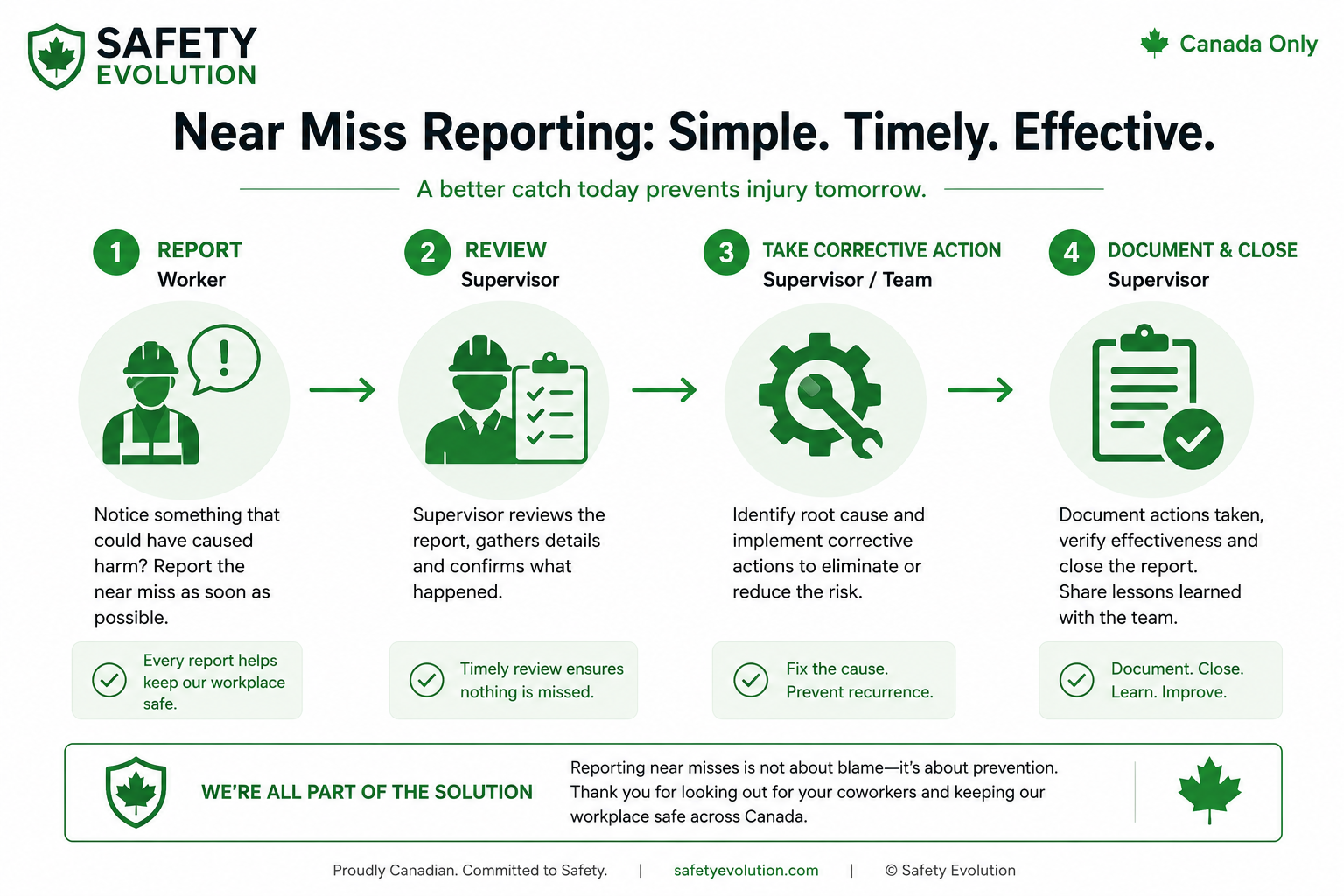
Use a simple default: report all meaningful near misses internally, triage serious-potential events, investigate when the risk justifies it, check jurisdiction-specific reporting duties before closing serious events, and review trends monthly. That workflow protects learning, supports compliance review, and keeps the process practical for field teams.
Companies working across provinces should avoid building a process that only fits one jurisdiction. The internal intake can be standard across the company, but the review step should identify where the work occurred and which legislation applies. That allows crews to use one familiar reporting workflow while safety leaders still apply the correct provincial, territorial, or federal requirements.
A practical approach is to add required fields for province or territory, business unit, site, employer or contractor, and whether the event involved serious potential. When the event is high potential or unusual, the system can flag it for safety or management review before closeout. This helps prevent a local rule from being missed in a centralized process.
Depending on the jurisdiction and workplace, joint health and safety committees or worker health and safety representatives may have roles in hazard reporting, investigation review, recommendations, and communication. Supervisors should know when a near miss can be handled through normal follow-up and when the event should be brought to the committee or representative process.
This is another reason documentation matters. When a committee asks what happened, what was corrected, and whether the same risk exists elsewhere, the organization should be able to answer with more than memory.
Before publishing or relying on a Canada-specific page, confirm the wording against the jurisdictions where Safety Evolution customers most often operate. The page should remain educational, practical, and province-aware. It should not imply that one rule applies uniformly across all Canadian employers.
Want better near miss reporting without more admin drag?
When reporting is clunky, supervisors skip it and crews stop believing it matters. Use Safety Evolution to capture close calls, assign follow-up, and keep the learning visible.
Start Your 30-Day Free Trial →Near misses should be reported internally as a prevention practice. External reporting duties depend on the province, territory, federal jurisdiction, industry, and the details of the event.
Yes when the near miss reveals meaningful risk, repeat exposure, or serious potential. The depth of investigation should match the credible severity and applicable jurisdictional requirements.
No. OSHA is a US agency. Canadian employers should use Canadian federal, provincial, or territorial requirements that apply to their workplace.
It should include immediate hazard control, simple reporting, risk triage, supervisor review, investigation where needed, corrective action tracking, and jurisdiction-specific review for serious events.
Learn how to build a near miss reporting system with a 7-step workflow, KPI model, and Canada vs US compliance guidance.
Understand the difference between near miss reporting and toolbox talks. Learn how they work together, when to use each, and how to build both into...
Learn the practical difference between near miss and incident, with field examples, decision flow, and Canada and US reporting context.