Last updated: April 2026
You bought a first aid kit from the hardware store, stuck it in the trailer, and assumed you're covered. Then an inspector opened it and found expired bandages, no eye wash, and a list of contents that doesn't match any CSA standard. The kit cost $40. The compliance order costs a lot more.
Safety Evolution can check your first aid documentation for kit compliance gaps, and the kit is one of the most common quick wins. Getting the right kit, stocking it properly, and inspecting it on schedule takes about an hour of your time and eliminates a guaranteed audit finding.
Quick Answer: What Kit Does Your Workplace Need?
- Standard: CSA Z1220-17 governs first aid kit types and contents across Canada
- Kit types: Type 1 (personal), Type 2 (basic, small/medium/large), Type 3 (intermediate, small/medium/large)
- BC additions: CSA standard plus BC-specific items per WorkSafeBC equipment info sheet (Oct 2024)
- Alberta: CSA Z1220-17 referenced directly in OHS Code Schedule 2
- Selection depends on: worker count, hazard level, and distance to medical services
- Inspection: Regular inspection and immediate replenishment after use
- Behind on first aid actions? Start your 30-day free trial to track training, records, and corrective actions in one place.
Workplace first aid kit requirements in Canada are governed by CSA Z1220-17, the national standard that specifies kit types, contents, and sizes based on workplace risk levels and the number of workers on site. Provincial regulations in BC and Alberta reference this standard and may add province-specific requirements. Getting the right kit is not guesswork; it flows directly from your first aid assessment results.
For the full picture of employer first aid obligations beyond kits, see our workplace first aid requirements guide.
What Is CSA Z1220-17?
CSA Z1220-17 is the Canadian Standards Association standard for workplace first aid kits. It defines what must be in each kit, how kits are categorized, and what situations each type is designed for.
The standard uses a tiered system:
- Type 1: Personal First Aid Kit. A small, portable kit for individual workers. Designed for workers operating alone or in remote situations where a full kit isn't immediately available. Contains the basics: adhesive bandages, gauze, tape, antiseptic, and a barrier device.
- Type 2: Basic First Aid Kit. Available in small, medium, and large sizes. Designed for workplaces with basic first aid coverage. Contains everything in Type 1 plus additional wound care supplies, a cold pack, triangular bandages, and scissors.
- Type 3: Intermediate First Aid Kit. Available in small, medium, and large sizes. Designed for workplaces requiring intermediate or advanced first aid coverage. Contains everything in Type 2 plus splints, a blanket, additional dressings, and more comprehensive wound care supplies.
The size (small, medium, large) within each type scales with the number of workers the kit needs to serve. A small Type 2 kit might serve 2-25 workers at a low-hazard site, while a large Type 3 kit serves 50+ workers at a high-hazard location.
How Do BC Kit Requirements Differ?
BC uses its own kit category names that align with the new certification levels introduced on November 1, 2024:
- Personal kit: Maps to CSA Type 1. For individual workers.
- Basic kit: Maps to the Basic first aid attendant level. Contents align with CSA Type 2 plus BC-specific additions.
- Intermediate kit: Maps to the Intermediate first aid attendant level.
- Advanced kit: Maps to the Advanced first aid attendant level.
WorkSafeBC published an updated equipment information sheet in October 2024 detailing the exact contents for each kit type, including BC-specific additions beyond the base CSA standard. You need to check this document; a generic CSA-compliant kit alone may not meet BC requirements.
The kit your workplace needs is determined by your BC first aid assessment results: worker count, hazard rating, and whether your site is classified as less accessible (ambulance response time exceeding 30 minutes).
Not sure if your first aid readiness would hold up in a real emergency?
See training gaps, expiring certificates, and missing documentation before they become incidents.
Start Your 30-Day Free Trial →How Do Alberta Kit Requirements Work?
Alberta OHS Code Schedule 2 references CSA Z1220-17 directly. The required kit type and size depend on your hazard level (low, medium, high), worksite distance category (close, distant, isolated), and worker count.
For high-hazard construction worksites (the most common scenario for Alberta contractors):
- 1-4 workers, close worksite: Type 2 Basic Small First Aid Kit
- 5-9 workers, close worksite: Type 3 Intermediate Small First Aid Kit
- 10-19 workers, close worksite: Type 3 Intermediate Medium First Aid Kit
- 20+ workers, close worksite: Type 3 Intermediate Large First Aid Kit (or multiple kits)
Distant and isolated worksites require upgraded kits at lower worker count thresholds. See our Alberta first aid requirements guide for the complete Schedule 2 breakdown.
What Are the Most Common Kit Mistakes?
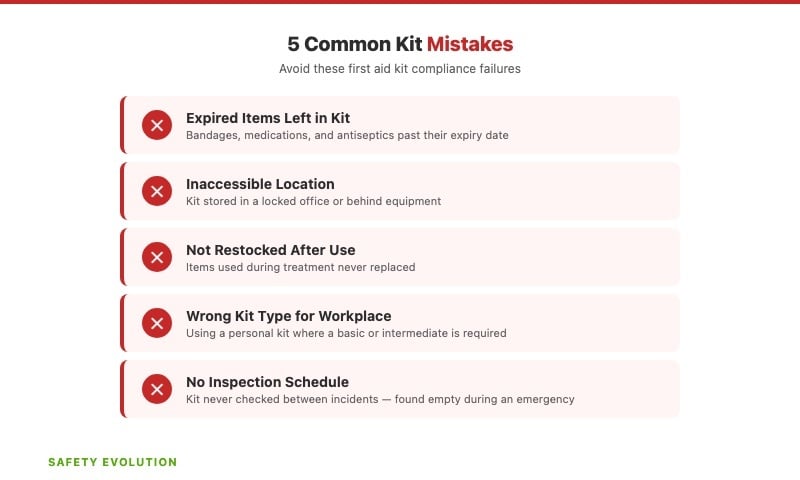
Most contractors think buying a kit is a one-time task. They're wrong. Here are the five mistakes we see most often during safety audits:
- Buying a retail "workplace" kit and assuming it's compliant. Retail kits are often missing CSA-required items. Check the label for CSA Z1220-17 compliance, then verify contents against your provincial requirements.
- Never replacing expired items. Bandages, antiseptic wipes, and cold packs expire. An expired kit is a non-compliant kit, even if everything else is perfect.
- Storing the kit where nobody can find it. The kit must be accessible to all workers during every shift. "In the foreman's locked truck" does not count as accessible.
- Having one kit for a multi-building or multi-floor site. If your workers are spread across multiple locations, each location needs its own kit within reasonable walking distance.
- Not restocking after use. Someone used the last pair of gloves and the cold pack two weeks ago, and nobody noticed. Inspection after every use, plus monthly audits, prevents this.
The blunt truth: at most small contractor sites we audit, the first aid kit is stuffed behind toolboxes, half the contents are expired, and nobody on the crew knows exactly where it is. This is fixable in under an hour.
How Often Should Kits Be Inspected?
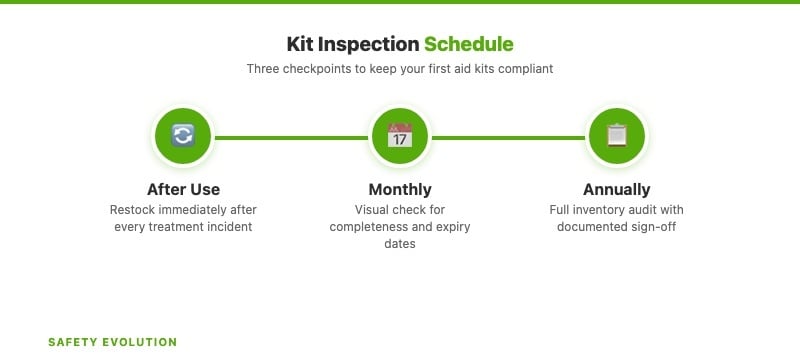
Neither BC nor Alberta specifies an exact inspection frequency in their regulations. Both require kits to be "maintained" and "replenished after use." Best practice is:
- After every use: Check and replenish any item that was used
- Monthly: Full contents inspection. Check expiry dates, verify all items present, replace anything damaged or expired
- Annually: Comprehensive review. Verify kit type still matches your first aid assessment (did your crew size change? Did you move to a different site?)
Document your inspections. A simple log with the date, inspector name, and any items replaced creates a record that demonstrates due diligence during audits.
First aid kit inspections are easy to build into your existing site inspection routine. If you're already doing weekly safety inspections, add the kit to your checklist.
Where Should First Aid Kits Be Located?
The rules are practical: kits must be accessible to all workers, clearly marked, and within reasonable reach during every shift.
For construction sites, that usually means:
- One in the site trailer or office (primary kit)
- Personal kits for workers in remote parts of the site
- Additional kits on multi-floor structures (one per floor or section)
- Vehicle kits for mobile crews working at multiple locations during a shift
Kits should be in a clean, dry location that's protected from weather but easy to open quickly. Avoid locked cabinets unless the lock can be opened without a key in an emergency.
Post signs indicating kit locations. Workers should know exactly where to go without asking. If your annual drill reveals that half the crew can't locate the kit in under a minute, you have a placement problem.
Construction-Specific Kit Considerations
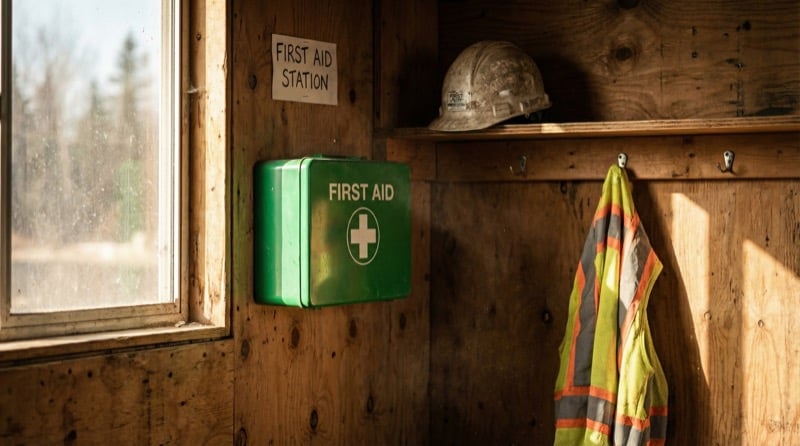
Construction sites have unique first aid kit challenges that office-based guidance doesn't cover:
- Dust and debris contamination. Kits on active construction sites need dust-proof or water-resistant cases. Open-top bags that sit in the trailer filling with drywall dust defeat the purpose.
- Eye wash accessibility. Construction generates particulate hazards (grinding, cutting, welding). Eye wash should be accessible within 10 seconds of travel time in areas with these hazards, not just in the main kit.
- Multi-trade, multi-employer sites. On sites with multiple subs, the GC typically provides site-level first aid, but each employer is responsible for ensuring their workers have access. Confirm the arrangement before assuming the GC has you covered.
- Kit portability. As the work moves through phases, the kit location may need to move with it. A kit in the foundation-phase trailer doesn't help a worker on the 12th floor.
If you're managing first aid as part of a broader safety program, our orientation and onboarding package includes first aid location protocols and kit inspection templates.
Seasonal and Environmental Kit Adjustments
The CSA standard defines minimum contents, but construction sites in western Canada face conditions that go beyond the minimum. Smart contractors adjust their kits based on the season and the work environment.
- Winter conditions: Add instant heat packs (not just cold packs), a thermal blanket rated for outdoor use, and extra gauze for treating cold-related injuries. Workers in heavy gloves are more prone to crush injuries, and frostbite on exposed skin requires immediate warming supplies that a standard kit may not include.
- Summer heat: Stock oral rehydration salts and additional cold packs. Heat exhaustion is a first aid event, and your kit should support the treatment your first aider is trained to provide. Consider adding sunburn relief supplies for crews working without shade structures.
- Remote and rural sites: Add a SAM splint, extra triangular bandages, and a more comprehensive wound care selection. When the nearest hospital is 40+ minutes away, your first aider may be managing an injury for an extended period before EMS arrives.
- Welding and grinding operations: Keep a secondary eye wash station near the hot work area, separate from the main kit. Eye injuries from flash burn or metal particulate need immediate flushing. Ten seconds of travel time to the eye wash is the standard; if your main kit is across the site, that standard is not being met.
These additions go beyond the regulatory minimum, but they reflect the actual conditions your workers face. An OHS officer will not cite you for having too much in your kit. They will notice if your kit contents do not match the hazards on your site.
Still chasing first aid records across files and inboxes?
Centralize corrective actions and proof so your next review is predictable.
Start Your 30-Day Free Trial →Frequently Asked Questions
What goes in a workplace first aid kit in Canada?
Contents are defined by CSA Z1220-17 and vary by kit type and size. A basic workplace kit (Type 2) typically includes adhesive bandages, gauze pads, medical tape, antiseptic, gloves, scissors, triangular bandages, a cold pack, and a CPR barrier device. Larger and higher-type kits add splints, blankets, and additional dressings. Your provincial regulator may require additional items beyond the CSA standard.
How many first aid kits does my workplace need?
At minimum, one kit per workplace location. Multi-floor, multi-building, or large-area sites may need multiple kits so that all workers can reach one within a reasonable time. Personal kits may also be required for workers operating in remote or isolated areas of the site. Your first aid assessment determines the specific requirements.
Can I use a store-bought first aid kit for my workplace?
Only if it meets CSA Z1220-17 standards for the type and size your workplace requires. Many retail kits are not CSA compliant or are missing items required by provincial regulations. Check the label for CSA Z1220-17 compliance, then verify contents against your provincial requirements (BC has additions beyond the CSA standard).
How often should workplace first aid kits be inspected?
Best practice is inspection after every use, monthly full contents review, and annual comprehensive review to verify the kit type still matches your first aid assessment. Document every inspection with the date, inspector name, and any items replaced or issues found.
Do first aid kits expire?
The kit container doesn't expire, but many individual items do. Adhesive bandages, antiseptic wipes, cold packs, and ointments all have expiry dates. Expired items must be replaced. This is one of the most common compliance findings during safety audits.
Get Weekly Safety Insights
Regulation updates, toolbox talk ideas, and compliance tips. One email per week.