Hydration Toolbox Talk: Keep Your Crew Safe
1 quart per worker per hour. Learn the hydration standard, what to drink, what to avoid, and the urine colour check every crew should know.
UV radiation is the most underestimated outdoor hazard. SPF 30+, UPF clothing, hard hat shades, and why sunburn makes heat stress worse.
Last updated: April 2026
Your roofer has been working without a shirt since 9 AM. His neck is already lobster-red, and he tells you he does not burn, he tans. In 20 years, that same roofer has a skin cancer biopsy and a dermatologist telling him the damage started decades ago. UV radiation does not care about tough. It is cumulative, invisible, and the most underestimated hazard on outdoor job sites.
Sun safety on job sites goes beyond sunburn. Construction and industrial workers receive 5 to 10 times more UV radiation than indoor workers over their careers. This toolbox talk covers UV hazards, the connection between sun exposure and heat stress, and the practical controls your crew needs from May through September.
Ultraviolet radiation from the sun damages skin cells even on cloudy days (up to 80% of UV penetrates cloud cover). For outdoor workers, the exposure is chronic and cumulative:
And here is the connection most safety programs miss: direct sun exposure adds 10 to 15°F to the effective temperature a worker experiences. A 90°F day in direct sun with no shade feels like 100 to 105°F to the worker's body. UV exposure and heat stress are not separate hazards. They compound each other.
Need Ready-to-Run Talks for Sun Safety and Heat Risk?
Download 52 toolbox talks with scripts and sign-in sheets so supervisors can run consistent weekly talks without scrambling.
Download the 52 Toolbox Talks PDF →Most workers either do not wear sunscreen or apply it once in the morning and forget about it. Here are the rules that actually work:
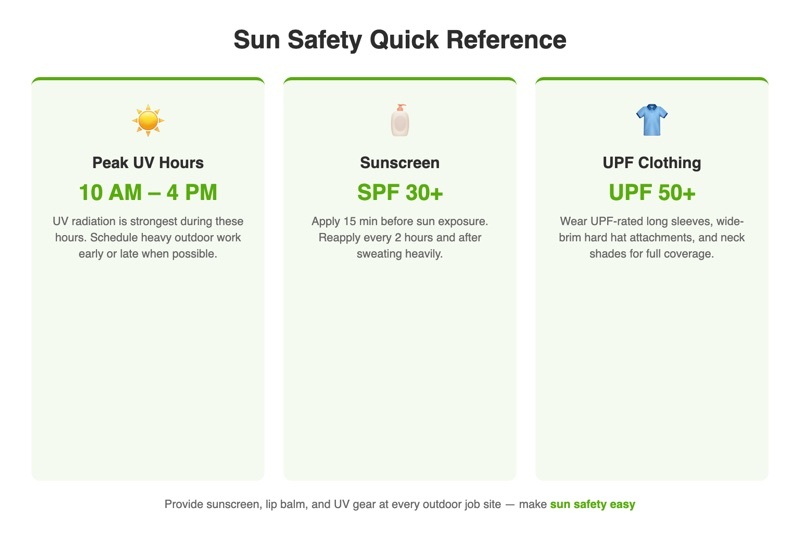
Clothing is more effective than sunscreen for sustained UV protection because it does not wash off with sweat:
The same schedule adjustments that help with summer construction safety also reduce UV exposure:
Deliver this at the morning tailgate on a sunny day. Keep it to 5 minutes. Key points:
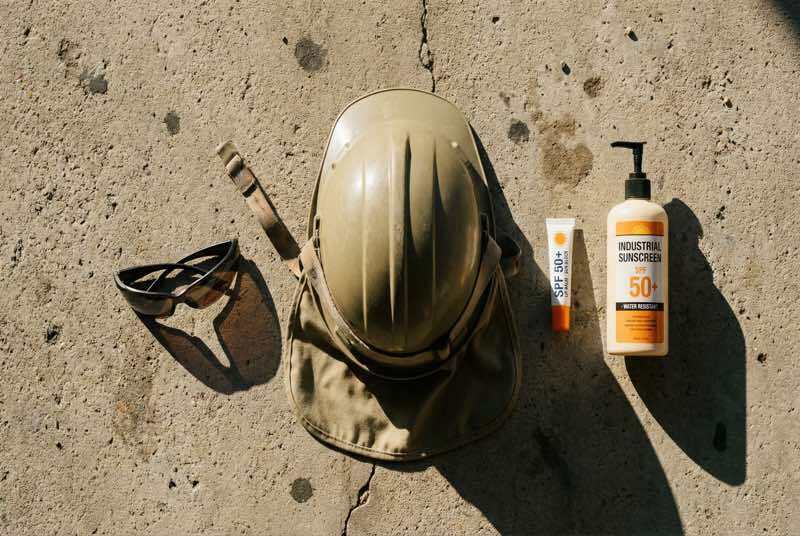
Pair this with a hydration toolbox talk and heat stress toolbox talk as part of your monthly rotation through summer safety topics.
Sun safety and heat stress prevention are not separate programs. They share the same controls (shade, scheduling, training) and the same at-risk workers. A worker who is sunburned is also a worker whose skin is less effective at cooling through sweating. Sunburn damages the sweat glands in the affected area, reducing the body's cooling capacity precisely when it needs it most.
Build UV protection into your heat stress prevention program as a single, integrated summer safety initiative. The controls overlap. The schedule overlaps. The toolbox talks overlap. One program, not two.
Start Free and Get 52 Toolbox Talks Ready to Use
Start your 30-day free trial and get 52 toolbox talks ready to run, with scripts and attendance tracking your supervisors can use immediately.
Start Your 30-Day Free Trial →Every 2 hours at minimum, and more frequently if sweating heavily. On an active construction site, reapply at every water break. Use SPF 30+ broad-spectrum sunscreen, and do not forget ears, back of neck, lips, and hands. Place sunscreen at water stations so workers apply it when they hydrate.
Yes. Up to 80% of UV radiation penetrates cloud cover. Workers can receive significant UV exposure on overcast days without realizing it because the visible light is reduced but UV is not. Maintain sun safety controls on all outdoor work days from May through September, not just sunny days.
UPF-rated clothing is more effective than sunscreen because it does not wash off with sweat. Lightweight UPF 50+ long-sleeve shirts, hard hat neck shades, full-brim hard hats, and ANSI Z87.1 UV-rated safety sunglasses provide the most consistent protection. Use sunscreen on exposed skin as a supplement, not a primary defense.
Yes. Sunburned skin has damaged sweat glands, which reduces the body's ability to cool through sweating in the affected area. A worker with significant sunburn is more susceptible to heat illness because their cooling system is compromised. Sun safety and heat stress prevention should be treated as one integrated program.
Yes. Outdoor workers have 2 to 3 times the risk of non-melanoma skin cancer (basal cell carcinoma and squamous cell carcinoma) compared to indoor workers. Construction, roofing, and utility workers receive 5 to 10 times the annual UV dose. UV damage is cumulative over a career, making long-term protection essential.
Get Weekly Safety Insights
Regulation updates, toolbox talk ideas, and compliance tips. One email per week.
1 quart per worker per hour. Learn the hydration standard, what to drink, what to avoid, and the urine colour check every crew should know.
Construction crews face higher heat risk from radiant heat, heavy PPE, and schedule pressure. Build a summer safety plan with task-specific controls.
Nobody thinks about food safety on a construction site until half the crew is sick. This toolbox talk covers the real risks of eating on site.