<img height="1" width="1" style="display:none" src="https://www.facebook.com/tr?id=2445087089227362&amp;ev=PageView&amp;noscript=1">

Hydration Toolbox Talk: Keep Your Crew Safe

Run a 5-minute hydration toolbox talk with your crew. Signs of dehydration, how much water to drink, and what every contractor needs to know.


Last updated: March 2026

Quick Answer: A hydration toolbox talk is a 5-minute crew discussion covering how much water to drink on site, signs of dehydration, and what happens when workers skip fluids in the heat. OSHA and NIOSH recommend drinking about 8 oz (one cup) of water every 15 to 20 minutes during hot work. Dehydration causes muscle cramps, confusion, and heat stroke. Your job as a contractor is to make water available, remind your crew to drink it, and know when someone is in trouble.

Here is the reality most contractors do not want to hear: dehydration is the number one contributor to heat-related illness on construction sites, and it is almost entirely preventable. Every summer, crews end up in emergency rooms because nobody stopped to drink water. Not because water was unavailable. Because nobody made it a priority.

At Safety Evolution, we help contractors build safety programs that actually work on site. We have seen crews lose entire afternoons because one worker went down from heat exhaustion that started with skipping water at 9 AM. This hydration toolbox talk gives you a ready-to-use 5-minute script to run with your crew before the heat hits.

Why Does Hydration Matter on Construction Sites?

Construction is one of the most physically demanding industries. Your crew is lifting, climbing, pouring concrete, and running equipment in direct sunlight. A worker doing moderate to heavy labor in summer heat can lose 1 to 2 liters of sweat per hour. That fluid has to be replaced, or the body starts shutting down.

Most contractors think dehydration is just about feeling thirsty. They are wrong. By the time a worker feels thirsty, they have already lost 1 to 2 percent of their body weight in fluid. At that point, physical performance drops, reaction time slows, and decision-making gets worse. On a construction site, slower reaction time and bad judgment get people hurt.

According to the CDC, heat-related illness causes dozens of workplace deaths and thousands of emergency room visits every year in the United States. The construction industry accounts for a disproportionate share of those incidents. In Canada, WorkSafeBC and Alberta OHS both require employers to address heat stress hazards, and hydration is a core part of that obligation.

The blunt truth: if a worker on your site goes down from dehydration and you did not provide water or rest breaks, you are liable. Not just morally. Legally.

Infographic showing early, moderate, and severe dehydration signs for construction workers

How Much Water Should Construction Workers Drink?

NIOSH recommends that workers performing moderate to heavy labor in the heat consume about 1 cup (8 oz or roughly 250 mL) of water every 15 to 20 minutes. That works out to about 1 liter per hour. Over a full shift in summer heat, that means a worker should be drinking 8 to 10 liters of water across the day.

There is also a ceiling. OSHA and NIOSH advise against drinking more than 48 oz (about 1.4 liters) in any single hour or more than 12 liters in 24 hours. Drinking too much water too fast can lead to hyponatremia, a dangerous drop in blood sodium levels. So the goal is steady, consistent intake throughout the day.

Activity Level Recommended Intake Frequency
Light work (supervising, planning) 4 oz (120 mL) Every 15-20 minutes
Moderate work (framing, finishing) 8 oz (250 mL) Every 15-20 minutes
Heavy work (concrete, excavation) 8-12 oz (250-350 mL) Every 15-20 minutes

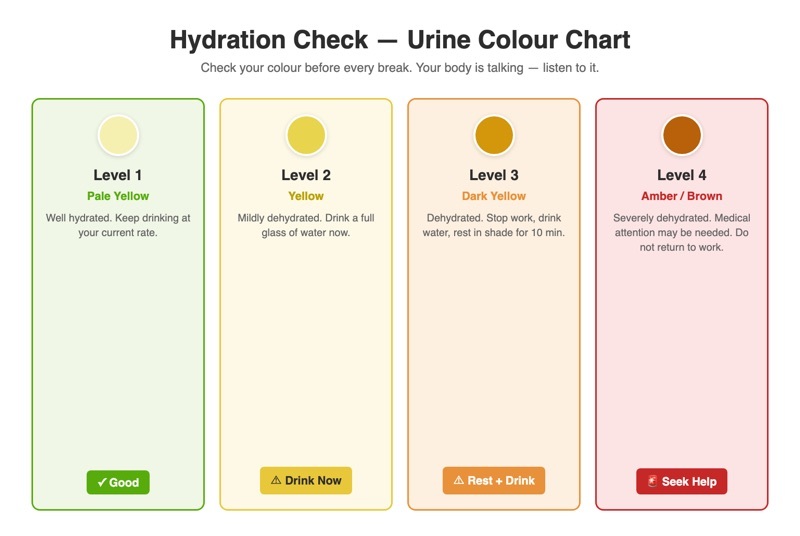
Practical tip for your crew: if your urine is dark yellow, you are already behind. Clear to light yellow is the target. Tell your workers to check before they start and during every break.

Need help building a complete heat safety program? Safety Evolution gives you a done-for-you safety department, including toolbox talk templates, FLHA forms, and a heat stress response plan. Book a call with our team to get started.

What Are the Signs of Dehydration to Watch For?

Train your crew to watch for these signs in themselves and each other. Dehydration does not announce itself with a warning bell. It creeps in, and by the time symptoms are obvious, the situation can be serious.

Early warning signs:

  • Dry mouth and increased thirst
  • Dark yellow urine or urinating less frequently
  • Headache that was not there at the start of shift
  • Fatigue or unusual tiredness
  • Dizziness when standing up or changing position

Moderate dehydration signs (act immediately):

  • Muscle cramps, especially in legs and arms
  • Nausea or loss of appetite
  • Rapid heartbeat
  • Reduced sweating despite hot conditions
  • Irritability or confusion

Severe dehydration signs (call 911):

  • Inability to sweat
  • Extreme confusion or inability to answer simple questions
  • Loss of consciousness or fainting
  • Seizures
  • Hot, dry, red skin

Here is something most toolbox talks skip: dehydration changes behavior before it changes the body. A dehydrated worker gets short-tempered, makes impulsive decisions, and takes shortcuts. If you notice a crew member who was fine at 7 AM acting irritable and sloppy by 10 AM, dehydration should be your first thought. Not attitude.

What Should Workers Drink (and What Should They Avoid)?

Water is the best option. Full stop. But there are things your crew is probably drinking right now that are making the problem worse.

Good choices:

  • Water: The default. Cold, cool, or room temperature all work. Cold water is absorbed slightly faster.
  • Electrolyte drinks (diluted): For shifts over 2 hours in extreme heat, a sports drink diluted 50/50 with water can help replace sodium and potassium lost through sweat. Full-strength sports drinks have too much sugar.
  • Coconut water: Natural electrolytes without the sugar load. Good option if your crew will drink it.

Bad choices (and why):

  • Energy drinks: The caffeine increases heart rate and acts as a mild diuretic, which accelerates fluid loss. The sugar causes a crash. Multiple workers have ended up in the ER after combining energy drinks with heavy labor in the heat. This is the biggest hydration mistake on construction sites right now.
  • Coffee: One cup in the morning is fine. Drinking coffee all day in the heat works against hydration. If your crew insists on coffee, they need to drink extra water to compensate.
  • Soda and sugary drinks: High sugar content slows fluid absorption in the gut. Diet soda is slightly better but still not a hydration tool.
  • Alcohol (the night before): Workers who drink heavily the night before a hot shift start the day already dehydrated. Mention this in your toolbox talk. It matters.

How to Run a 5-Minute Hydration Toolbox Talk

Here is a script you can use directly with your crew. Keep it short, keep it real, and do it before the heat hits.

Step 1: Set the scene (30 seconds)

"We have hot weather coming this week. Before we get into the day, I want to talk about water. This is not optional. People end up in the hospital every summer because they did not drink enough. I am not going to let that happen on this site."

Step 2: State the rule (30 seconds)

"One cup of water every 15 to 20 minutes. That is the rule. I do not care if you are not thirsty. By the time you feel thirsty, you are already dehydrated. We have water stations set up at [locations]. Use them."

Step 3: Cover the warning signs (1 minute)

"Watch for headaches, cramps, dizziness, and dark urine. If you notice any of these in yourself, stop, get to shade, and drink water. If you see a coworker who looks confused, is stumbling, or stops sweating on a hot day, that is an emergency. Get them in the shade and call me immediately."

Step 4: Address what not to drink (1 minute)

"Energy drinks are not water. Coffee is not water. I know some of you live on Red Bull. On hot days, it is going to dehydrate you faster. I am not telling you to quit. I am telling you to drink a cup of water for every energy drink or coffee you have."

Step 5: Make it personal (1 minute)

"Last thing: if you went out last night and had a few drinks, you are starting today behind on hydration. Own it, drink more water, and let me know if you are feeling rough. I would rather know at 7 AM than deal with a medical call at noon."

Download our free toolbox talk package for 50+ ready-to-use topics you can deliver to your crew in 5 minutes or less.

Employer Responsibilities for Hydration on Site

Running a toolbox talk is a good start. But you also have legal obligations around heat and hydration that go beyond a morning chat.

In the United States:

OSHA's General Duty Clause requires employers to provide a workplace free from recognized hazards, and heat stress is a recognized hazard. OSHA's proposed Heat Injury and Illness Prevention Standard (published in the Federal Register on August 30, 2024, with public hearings held in June and July 2025) would formally require employers to provide water, rest, shade, and acclimatization plans when temperatures reach certain thresholds. Even before this rule is finalized, OSHA is actively citing employers under the General Duty Clause for heat-related incidents.

At minimum, OSHA expects you to:

  • Provide potable drinking water that is readily accessible to all workers
  • Ensure water is suitably cool and located close to work areas
  • Allow and encourage workers to take rest breaks in shaded or air-conditioned areas
  • Monitor workers for signs of heat illness
  • Have an emergency response plan for heat-related incidents

In Canada:

Provincial OHS regulations vary, but all require employers to address workplace hazards, including thermal stress. In Alberta, the OHS Code requires employers to assess and control hazards, which includes heat exposure for outdoor workers. In British Columbia, WorkSafeBC has specific heat stress exposure guidelines under the OHS Regulation and regularly issues advisories during heat events. The Canadian Centre for Occupational Health and Safety (CCOHS) recommends employers provide cool drinking water close to the work area and establish a heat stress prevention program.

The bottom line: providing water is not a nice-to-have. It is a legal requirement. And if a worker suffers heat illness because you did not provide adequate water or rest, you face fines, WCB claims, and potential criminal charges under Bill C-217 (Westray Law) provisions.

Setting Up Hydration Stations on Your Job Site

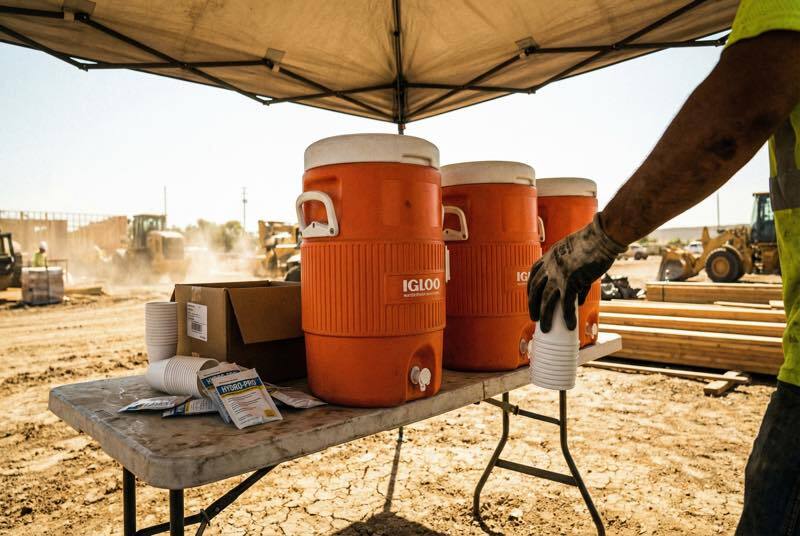
Making water available is not the same as making it accessible. If the only water cooler is in a trailer 200 meters from the work area, your crew will not walk there every 15 minutes. They will skip it and tell themselves they will catch up later. They will not.

Practical setup tips:

  • Place water within 50 meters of every active work area. If workers have to walk more than a minute to get water, they will not drink enough.
  • Use insulated coolers, not just jugs. Nobody wants to drink warm water that has been sitting in the sun since 6 AM.
  • Stock disposable cups or individual bottles. A shared dipper is a health code issue and workers avoid it.
  • Refill before the cooler is empty. Assign someone to check water stations at morning break, lunch, and afternoon break.
  • Add electrolyte packets near the water station. Do not mix them into the main cooler (some workers do not want them). Keep them separate so workers can add them to their own bottles.
  • Post a sign. A simple reminder like "Drink 1 cup every 15 minutes" next to the cooler actually works. People follow visible prompts.

If you manage multiple trades on a single site, make sure subcontractors know where the water is. Do not assume their employer handled it. If they are on your site, their safety is your problem too.

Stop chasing paper safety programs. Safety Evolution builds your entire safety system, including toolbox talks, FLHAs, orientations, and heat stress plans. Book a call and get a 90-day action plan for your crew.

Common Hydration Mistakes Contractors Make

We have worked with hundreds of contractors on their safety programs. These are the hydration mistakes we see repeatedly:

  1. "We have water on site, so we are covered." Having water and ensuring workers drink it are two different things. You need a system: toolbox talks, visible reminders, scheduled breaks, and someone watching for signs of trouble.
  2. Relying on workers to self-manage. Construction workers are tough. That is the problem. They will push through headaches and cramps rather than stop working. You have to make hydration part of the work schedule, not a personal choice.
  3. Ignoring the first 3 days of a heat wave. OSHA data shows that most heat-related deaths occur in the first few days of hot weather. Workers have not acclimatized yet. Ramp up hydration reminders and rest breaks at the start of every heat event, not after someone gets sick.
  4. Treating it as a one-time talk. A hydration toolbox talk in May does not cover you for August. Run this talk every time temperatures spike. Weekly in summer is not too often.
  5. Not documenting the talk. If a worker has a heat-related incident and you cannot prove you discussed hydration, you are in a worse position with OSHA, WorkSafeBC, or Alberta OHS. Use a toolbox meeting form and get signatures.

Hydration and Heat Acclimatization

Hydration and acclimatization go hand in hand. A worker who is not acclimatized to the heat sweats less efficiently and needs even more fluid to stay safe.

NIOSH recommends a gradual acclimatization schedule: new workers or workers returning from more than a week away should start at 20% of their normal workload on Day 1, increasing by 20% each day until they reach full capacity by Day 5. During acclimatization, hydration monitoring needs to be even more aggressive.

This matters most for:

  • New hires starting in summer
  • Workers returning from vacation or illness
  • Crews that worked indoors during spring and are moving to outdoor projects
  • The first heat wave of the season (everyone on site is re-acclimatizing)

For more on getting new workers ready for the job site, check out our new and young worker toolbox talk.

Free Hydration Toolbox Talk Checklist

Use this checklist before every hot weather shift:

  • ☐ Water stations set up within 50 meters of all work areas
  • ☐ Coolers filled with cold water and ice
  • ☐ Disposable cups or individual bottles available
  • ☐ Electrolyte packets available (optional but recommended)
  • ☐ Shaded rest area designated
  • ☐ Hydration toolbox talk delivered and documented
  • ☐ Workers reminded: 1 cup every 15-20 minutes
  • ☐ Warning signs reviewed (headache, cramps, dizziness, dark urine)
  • ☐ Emergency response plan reviewed (who to call, where to take them)
  • ☐ New workers identified for acclimatization schedule

Looking for more toolbox talk topics your crew will actually pay attention to? Download our Ultimate Guide to Toolbox Talks with 365 topics for a full year of safety meetings.

Frequently Asked Questions About Hydration on Construction Sites

How much water should a construction worker drink per hour?

NIOSH recommends about 1 cup (8 oz or 250 mL) every 15 to 20 minutes during moderate to heavy work in the heat. That equals roughly 1 liter per hour. Do not exceed 1.4 liters (48 oz) in any single hour, as overhydration can cause hyponatremia.

Can energy drinks replace water on a construction site?

No. Energy drinks contain caffeine, which acts as a mild diuretic and increases heart rate. Combined with heavy labor in the heat, energy drinks can accelerate dehydration and increase the risk of heat illness. Workers should drink water as their primary fluid and limit energy drinks on hot days.

Is an employer required to provide water on a construction site?

Yes. In the US, OSHA requires employers to provide potable drinking water that is readily accessible. In Canada, provincial OHS regulations require employers to control workplace hazards including heat stress, which includes providing adequate drinking water. Failure to provide water can result in fines and liability for heat-related injuries.

What are the first signs of dehydration on a job site?

The earliest signs include thirst, dark yellow urine, headache, fatigue, and dizziness. Behavioral changes like irritability and poor decision-making are also early indicators. If a worker shows any of these signs, they should stop work, move to shade, and drink water immediately.

How often should I run a hydration toolbox talk?

Run a hydration toolbox talk at the start of every heat event and at least weekly during summer months. OSHA data shows most heat-related deaths happen in the first few days of hot weather, so early and repeated reminders are critical. Document every talk with a toolbox meeting form for compliance records.

Ready to build a safety program that runs itself? Safety Evolution handles your toolbox talks, FLHAs, orientations, and COR documentation so you can focus on running your crew. Book your free call and get a 90-day action plan.

Similar posts

Get Safety Tips That Actually Save You Time

Join 5,000+ construction and industrial leaders who get:

  • Weekly toolbox talks

  • Seasonal safety tips

  • Compliance updates

  • Real-world field safety insights

Built for owners, supers, and safety leads who don’t have time to chase the details.

Subscribe Now