Heat Stress Prevention: Complete Guide
55 workers died from heat in 2023. Learn the 5 controls every employer needs, OSHA requirements, and Canadian regulations for heat stress prevention.
Learn the 5 stages of heat illness, from heat rash to heat stroke. Spot symptoms early, respond fast, and know when to call 911 on your job site.
Last updated: April 2026
It starts with a headache. Then dizziness. Your worker says he just needs a minute, but his skin is pale and clammy, he is sweating through his shirt, and he cannot remember where he set down his tools. Is this heat exhaustion that a 20-minute break in the shade will fix, or heat stroke that needs paramedics in the next 10 minutes?
Heat stress symptoms are the body's warning signals that its cooling system is overwhelmed by heat, physical exertion, or restrictive PPE. Recognizing these symptoms early is the single most important factor in preventing the 55 heat-related workplace deaths and approximately 28,000 heat-linked injuries that occur every year in the United States. This guide walks you through each stage of heat illness, the symptoms to watch for, and exactly what to do when you see them on your job site.
Heat illness does not jump from "fine" to "fatal." It follows a progression, and each stage gives you a window to intervene before the next one hits. The problem is that most workers and supervisors on construction and industrial sites have never been taught to recognize the early stages. They know about heat stroke. They do not know that the cramps their worker complained about 30 minutes ago were the body's second warning.
Here is the full progression, sourced from the Canadian Centre for Occupational Health and Safety (CCOHS) and NIOSH guidelines:
Small red bumps on the skin, usually in areas covered by clothing or PPE, with intense itching. Heat rash happens when sweat ducts get blocked in hot, humid conditions. It is not dangerous on its own, but it is a sign that the worker's body is struggling to dissipate heat. Workers wearing coveralls, harnesses, and hard hats in humid conditions are especially prone.
What to do: Move to a cooler area if possible. Remove wet clothing. Keep the skin dry. The rash usually resolves when the worker returns to a cooler environment.
Sharp, involuntary muscle spasms, usually in the legs, arms, or abdomen. Heat cramps are caused by a salt imbalance from heavy sweating combined with drinking large amounts of plain water (which dilutes electrolytes further). The worker can still function, but their body is telling them to stop.
What to do: Stop physical activity. Move to a cool area. Drink water or a sports drink with electrolytes. Gently stretch the cramping muscles. Do not return to heavy work until the cramps have completely resolved.
This is where things get serious, and this is the stage most people confuse with heat stroke. Heat exhaustion is the body losing its fight against heat, but the cooling system is still working.
Symptoms include:
What to do: This is a "stop everything" moment. Move the worker to shade or an air-conditioned area. Remove excess clothing and PPE. Apply cool, wet cloths to the head, face, and neck. Have them sip cool water if alert. Do not leave the worker alone. If symptoms do not improve within 15 minutes, get medical attention because this can progress to heat stroke.
Sudden dizziness or fainting, caused by insufficient blood flow to the brain. This happens when blood pools in the legs while the body is also diverting blood to the skin for cooling. Most common in unacclimatized workers who have been standing in heat for extended periods. The worker may collapse without other warning signs.
What to do: Help the worker lie down in a cool area with legs elevated. Cool water and rest. Recovery is usually rapid, but the worker should not return to heat exposure for the rest of the shift. If the worker does not regain full consciousness quickly, treat as heat stroke.
Heat stroke is a medical emergency. Call 911 immediately.
Heat stroke means the body's cooling system has completely failed. Body temperature rises above 40°C (104°F), and without immediate intervention, organ damage and death can follow within minutes.
There are two types:
Symptoms include:
Most people believe that if a worker is still sweating, it cannot be heat stroke. That is a dangerous misconception. Exertional heat stroke, the type most likely to hit your workers on a construction site, frequently presents with sweating. The key indicators are confusion, altered mental status, and extremely high body temperature.
What to do:
Not sure if your first aid readiness would hold up in a real emergency?
See training gaps, expiring certificates, and missing documentation before they become incidents.
Start Your 30-Day Free Trial →Not everyone on your crew faces the same risk. Understanding who is most vulnerable helps you target your monitoring and prevention controls where they matter most.

Unacclimatized workers are the highest risk group, period. OSHA data shows that the majority of heat-related workplace fatalities occur in the first few days on the job or the first few days of a sudden heat wave. A new hire who has been working indoors or in cooler weather is physiologically unprepared for intense heat. The NIOSH 20% rule (no more than 20% heat exposure on Day 1, increasing daily) exists specifically because of this pattern.
Other high-risk groups:
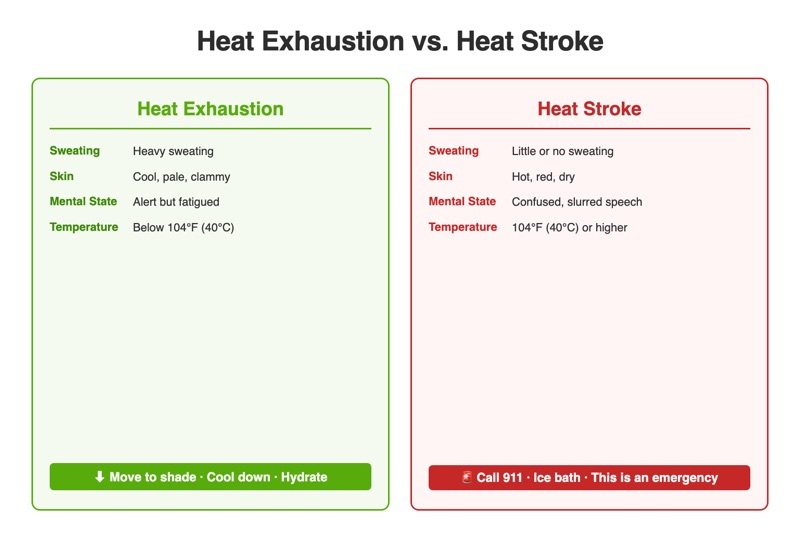
This is the comparison every supervisor needs to have memorized. Getting it wrong costs time in the best case and a life in the worst.
| Sign | Heat Exhaustion | Heat Stroke |
|---|---|---|
| Sweating | Heavy, profuse | May be present (exertional) or absent (classical) |
| Skin | Pale, cool, clammy | Hot, may be dry or wet |
| Mental state | Alert but weak, may be irritable | Confused, disoriented, unconscious |
| Body temperature | Below 40°C (104°F) | Above 40°C (104°F) |
| Pulse | Rapid, weak | Rapid, strong |
| Response | Cool down, rest, fluids, monitor | Call 911 immediately |
The simplest field test: Can the worker carry on a coherent conversation? If they are confused, cannot answer simple questions (What day is it? What is your name? Where are you?), or their speech is slurred, treat it as heat stroke regardless of other signs. Do not wait for a thermometer reading.
Every heat illness incident, even mild ones resolved on site, should be documented. Here is why it matters beyond compliance.
In the United States: Under OSHA recordkeeping (29 CFR 1904), heat-related illnesses requiring medical treatment beyond basic first aid must be recorded on the OSHA 300 log. Heat-related fatalities must be reported to OSHA within 8 hours. Hospitalizations must be reported within 24 hours.
In Canada: Report to your provincial workers' compensation board. In Alberta, this is WCB Alberta. In British Columbia, WorkSafeBC. In Ontario, the WSIB. Each province has specific reporting timelines for workplace injuries and illnesses.
Beyond compliance, tracking heat incidents reveals patterns: which crews, which tasks, which times of day, which workers are recurring. Use that data to adjust your heat stress training and summer safety program.
Still chasing first aid records across files and inboxes?
Centralize corrective actions and proof so your next review is predictable.
Start Your 30-Day Free Trial →The earliest signs include heavy sweating, muscle cramps (especially in the legs and abdomen), dizziness, headache, and fatigue. These are Stage 1 and 2 symptoms that respond well to rest, shade, and fluids. If a worker reports any of these, move them to a cool area and monitor closely. Do not wait for symptoms to worsen.
Yes. Exertional heat stroke, the most common type on job sites, frequently occurs while the worker is still sweating. The body is producing sweat but cannot cool fast enough to offset the heat generated by intense physical work. The key indicators of heat stroke are confusion, altered mental state, and body temperature above 40°C (104°F), not the presence or absence of sweating.
Heat exhaustion can progress to heat stroke within minutes if the worker continues physical activity in the heat without intervention. There is no fixed timeline because it depends on the worker's hydration, acclimatization, fitness, and the severity of heat exposure. The safest approach: treat every case of heat exhaustion as a potential precursor to heat stroke and intervene immediately.
Only if the person is fully conscious and alert. If the worker is confused, disoriented, or has lost consciousness, do not force fluids because they could choke or aspirate. Focus on calling 911, moving them to a cool area, removing clothing, and applying ice packs to the neck, armpits, and groin while waiting for paramedics.
Call 911 immediately if a worker shows confusion, slurred speech, loss of consciousness, seizures, or body temperature above 40°C (104°F). Also call if heat exhaustion symptoms do not improve after 15 minutes of rest, cooling, and fluids. When in doubt, call. A false alarm is always better than a delayed response to heat stroke.
Get Weekly Safety Insights
Regulation updates, toolbox talk ideas, and compliance tips. One email per week.
55 workers died from heat in 2023. Learn the 5 controls every employer needs, OSHA requirements, and Canadian regulations for heat stress prevention.
Federal OSHA doesn't require safety meetings, but 14+ states do. State-by-state requirements, Cal/OSHA's 10-day rule, and why you need them anyway.
UV radiation is the most underestimated outdoor hazard. SPF 30+, UPF clothing, hard hat shades, and why sunburn makes heat stress worse.