Sun Safety Toolbox Talk: UV Protection for Crews
UV radiation is the most underestimated outdoor hazard. SPF 30+, UPF clothing, hard hat shades, and why sunburn makes heat stress worse.
Construction crews face higher heat risk from radiant heat, heavy PPE, and schedule pressure. Build a summer safety plan with task-specific controls.
Last updated: April 2026
You are running a commercial build through July and August. Concrete pours that cannot wait. Steel going up at 2 PM because the crane is booked. And a crew that started the summer strong but is dragging by mid-afternoon because the heat index has been above 90°F for three straight weeks. Summer construction safety is not a separate topic from heat stress prevention. It is the same topic, applied to the reality of building in 95-degree heat with hard deadlines.
Summer construction safety covers the specific heat-related hazards, schedule adjustments, and site controls that construction employers need from May through September. Construction workers face disproportionate heat risk: outdoor exposure, radiant heat from asphalt and concrete, heavy PPE, and physically demanding tasks. OSHA data shows construction consistently leads heat-related workplace fatality statistics.
Construction is not a typical outdoor job for heat risk. It compounds multiple heat factors simultaneously:
Need Ready-to-Run Talks for Summer Construction Safety Plan?
Download ready-to-use toolbox talks with scripts and sign-in sheets so supervisors can run consistent weekly talks without scrambling.
Download the 52 Toolbox Talks PDF →The single biggest adjustment you can make is when you work, not just how. Schedule the heaviest physical tasks (concrete pours, roofing, asphalt paving) for the coolest parts of the day: before 10 AM or after 4 PM. Use the hottest hours (11 AM to 3 PM) for lighter tasks, material staging, or additional rest breaks.
This is not always possible. Concrete sets on its own schedule. Crane lifts happen when the crane is available. When you cannot reschedule the work, increase the rest frequency. On days above 90°F with high-intensity tasks, 15-minute rest breaks every 45 minutes is a better target than the standard 10 minutes per hour.
Before the first hot week, set up your site for heat:
Summer hires and workers returning from vacation are your highest risk group. The NIOSH 20% rule applies: no more than 20% heat exposure on Day 1, increasing by 20% daily. A new labourer starting in July gets 1.5 hours on the roof the first day, not a full 8-hour shift.
Also watch for the first heat wave of the season. Even acclimatized workers lose some heat tolerance after a cooler period. When temperatures jump 15°F or more in a few days, treat the first 2 to 3 days like an acclimatization period for everyone.
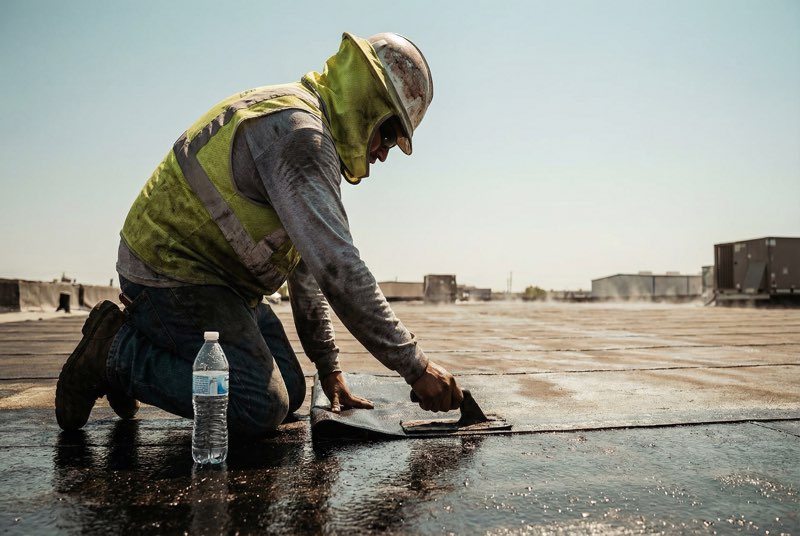
Roofing: Highest radiant heat exposure. Dark materials. No shade. Start at dawn. Mandatory 15-minute rest every 45 minutes once roof surface temperature exceeds 120°F (check with an infrared thermometer, not the weather app).
Concrete pours: Time-sensitive but heat-critical. If the pour cannot be rescheduled, increase crew size so workers can rotate between pour and rest more frequently. Have water and shade at the pour location, not back at the trailer.
Steel erection: Metal absorbs and radiates heat. Workers at height have less access to shade and water. Buddy checks are especially critical because symptoms can develop rapidly at elevation with no immediate access to cooling.
Excavation and earthwork: Trench walls can block airflow while reflecting heat. Monitor conditions inside the excavation separately from ambient temperature.
Most people think PPE is not negotiable on a construction site. They are right about the protection, wrong about assuming there are no heat-smart alternatives. Review your PPE program for summer:
FR coveralls in oil and gas operations are a special challenge. They add significant thermal load but cannot be replaced. For FR workers, increase rest frequency, provide air-conditioned rest areas, and use cooling vests worn under the coveralls.
Build heat into your regular summer toolbox talk rotation:
For the full heat stress training compliance checklist, including documentation requirements and what OSHA inspectors look for, see our detailed guide.
Start Free and Get 52 Toolbox Talks Ready to Use
Start your 30-day free trial and get 52 toolbox talks ready to run, with scripts and attendance tracking your supervisors can use immediately.
Start Your 30-Day Free Trial →There is no universal "stop work" temperature for construction. Risk depends on heat index, humidity, task intensity, PPE, and acclimatization. OSHA's proposed triggers are 80°F heat index for initial protections and 90°F for enhanced protections. California requires shade at 80°F and high-heat procedures at 95°F. Adjust schedules and increase rest breaks as temperatures rise rather than setting a single cutoff.
Five core controls: water (1 quart per worker per hour), scheduled rest breaks in shade, acclimatization for new and returning workers (20% rule over 5 days), training on heat illness recognition and emergency response, and monitoring (buddy system checks every 30 minutes). Schedule heavy tasks before 10 AM or after 4 PM when possible.
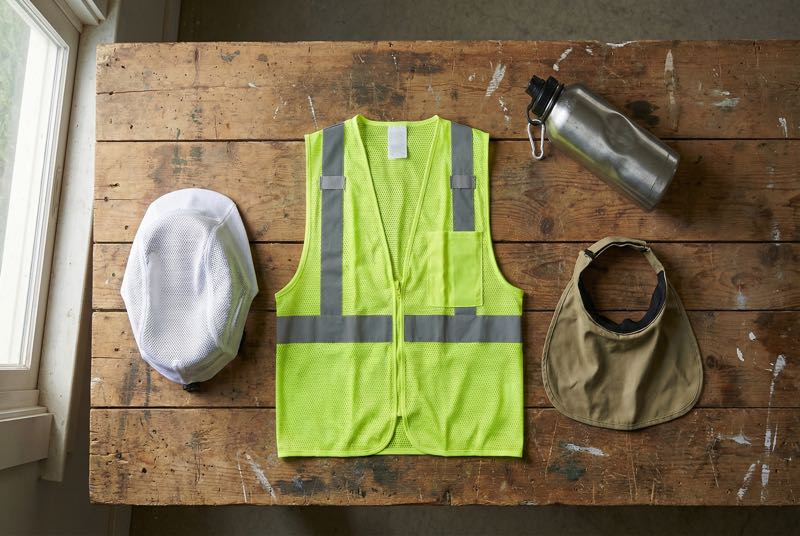
Evaporative cooling hard hat liners, moisture-wicking base layers, mesh-style hi-vis vests, and light-coloured clothing all reduce heat load while maintaining protection. For workers in FR coveralls, cooling vests worn underneath and more frequent rest breaks in air-conditioned areas are the primary mitigations.
NIOSH recommends 1 quart (32 oz) of cool water per worker per hour during heat conditions. For a 20-person crew on an 8-hour shift, plan for a minimum of 40 gallons. Position water stations at the work location, not at the main trailer. Workers should drink before they feel thirsty because thirst is a late dehydration signal.
Yes. Schedule the most physically demanding tasks (roofing, concrete pours, asphalt paving) before 10 AM or after 4 PM. Use the hottest hours for lighter tasks, material staging, or additional rest breaks. When schedule pressure makes this impossible, increase crew size for rotation and add rest breaks every 45 minutes during high heat.
Get Weekly Safety Insights
Regulation updates, toolbox talk ideas, and compliance tips. One email per week.
UV radiation is the most underestimated outdoor hazard. SPF 30+, UPF clothing, hard hat shades, and why sunburn makes heat stress worse.
1 quart per worker per hour. Learn the hydration standard, what to drink, what to avoid, and the urine colour check every crew should know.
Weather toolbox talk covering extreme heat and cold hazards on construction sites. Includes prevention tips, warning signs, and a crew discussion...