Last updated: March 2026
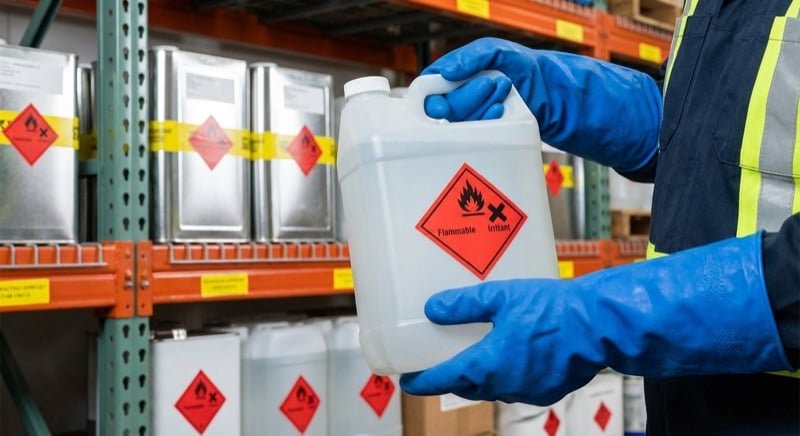
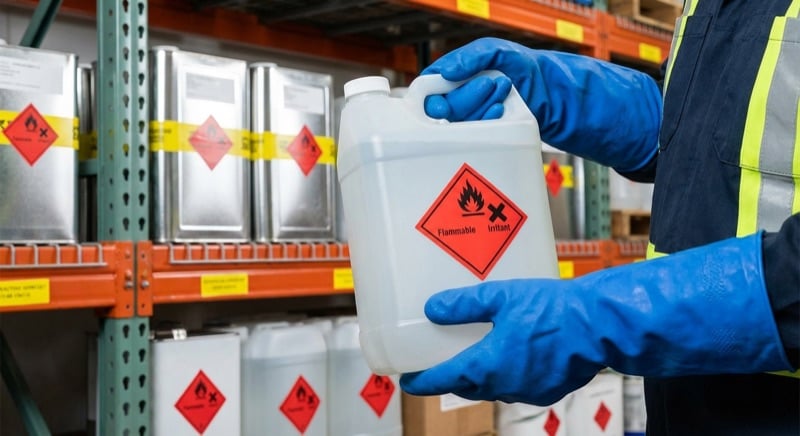
You've got a container on site with a red diamond symbol on the label. One of your crew picks it up, glances at it, and says, "Yeah, it's probably just flammable or whatever." He's wrong. That symbol means the product can cause cancer. And nobody on your crew knows the difference because your WHMIS training was a checkbox exercise three years ago.
At Safety Evolution, we build safety programs for contractors every week, and WHMIS pictogram confusion is one of the most common gaps we find during program reviews. The good news: once you understand all 10 pictograms, your crew can identify hazards in seconds instead of guessing.
⚡ Quick Answer: WHMIS Pictograms
- What: WHMIS pictograms are standardized symbols on labels and Safety Data Sheets (SDSs) that instantly communicate what type of hazard a product presents
- How many: 10 total: 9 red-bordered diamond symbols (from GHS) plus 1 Canada-specific biohazard symbol
- Where you'll see them: Supplier labels, workplace labels, and Section 2 of every SDS
- Why they matter: Your crew needs to recognize them instantly. Regulators check for WHMIS compliance during audits, and fines for non-compliance can reach $1 million CAD or more
- Recent change: December 2022 amendments added the "Chemicals Under Pressure" hazard class. The transition period ended December 14, 2025. Your labels and SDSs should already reflect the updates
What Are WHMIS Pictograms?
WHMIS pictograms are standardized graphic symbols used across Canada to identify specific hazards associated with workplace chemicals and hazardous products. They appear on product labels and Safety Data Sheets (SDSs) as part of the Workplace Hazardous Materials Information System (WHMIS), which is Canada's national system for hazard communication.
Most WHMIS pictograms feature a distinctive red diamond-shaped border (a square rotated 45 degrees) with a black symbol inside on a white background. The symbol inside the border tells you the type of hazard: fire, poison, corrosion, explosion, and so on. Together, the border and the symbol make up the pictogram.
Since 2015, WHMIS has been aligned with the Globally Harmonized System (GHS), which means most of these pictograms are recognized internationally. There's one exception: the biohazardous infectious materials pictogram is unique to Canada, carried over from the original WHMIS 1988 system.
If your crew works with any chemicals on site (solvents, cleaners, adhesives, fuels, paints), they need to know what these symbols mean. Not in theory. In practice, at 6:30 AM when they're grabbing a container off the shelf.
Not sure if your WHMIS training is current? Book a free safety assessment — you'll get a 30-minute review of your program plus a 90-day action plan to close any gaps.
How Many WHMIS Pictograms Are There?
There are 10 WHMIS pictograms in total. Nine of them use the red diamond border from the GHS system. The tenth is the biohazardous infectious materials symbol, which uses a round black border and is specific to Canadian regulations.
Here's the part most contractors get wrong: they assume every hazardous product will have a pictogram on the label. That's not true. Some WHMIS hazard categories don't require a pictogram at all (like Aerosols Category 3 or Combustible Dusts). The product is still hazardous, but the label communicates the risk through signal words and hazard statements instead. This is why your crew can't rely on pictograms alone. They need to read the full label and know how to check the SDS. If you need a refresher on reading an SDS, check out our complete guide to Safety Data Sheets (linked below).
What Does Each WHMIS Pictogram Mean?
Let's break down all 10 pictograms. For each one, you'll get the official name, what hazard it represents, and where your crew is most likely to encounter it on a job site.
1. Flame
What it means: The product can catch fire easily. This covers flammable gases, liquids, solids, aerosols, pyrophoric materials (which ignite on contact with air), and self-heating substances.
Where you'll see it on site: Gasoline, propane, acetylene, solvents, certain adhesives and paints, WD-40 and similar aerosol products.
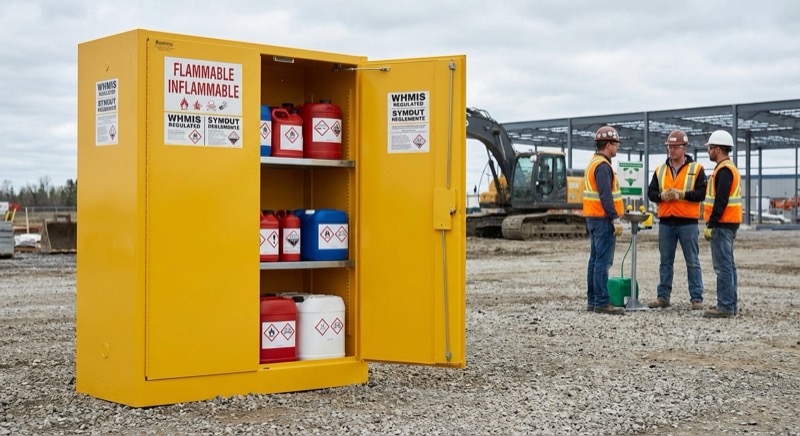
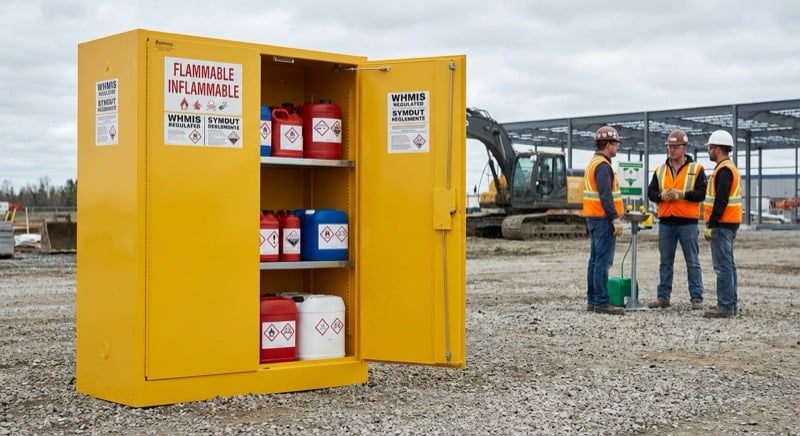
What your crew needs to know: Keep away from heat, sparks, and open flames. Store in approved flammable storage cabinets. This is the most common pictogram on a construction site, and complacency around it is where incidents happen.
2. Flame Over Circle (Oxidizer)
What it means: The product can cause or intensify a fire by supplying oxygen. Oxidizers don't necessarily burn themselves, but they make other things burn faster and hotter.
Where you'll see it on site: Oxygen tanks, certain bleaching agents, pool chemicals, some concrete curing compounds.
What your crew needs to know: Never store oxidizers near flammable materials. A leak from an oxygen tank near grease-soaked rags is a fire waiting to happen.
3. Gas Cylinder
What it means: The product is a gas stored under pressure. This includes compressed, liquefied, refrigerated, and dissolved gases, plus the newer "chemicals under pressure" class added in the December 2022 amendments.
Where you'll see it on site: Welding gases (argon, CO2), compressed air cylinders, propane tanks, refrigerants.
What your crew needs to know: Pressurized containers can explode if heated or punctured. Store upright, secure with chains, and keep away from heat sources. This one seems obvious until someone leaves a cylinder in direct sun on a July afternoon.
4. Corrosion
What it means: The product can cause severe skin burns, eye damage, or corrode metals. The pictogram shows a chemical eating through both a surface and a hand.
Where you'll see it on site: Battery acid, concrete cleaners (muriatic acid), drain openers, certain industrial degreasers.
What your crew needs to know: Wear chemical-resistant gloves, goggles (not just safety glasses), and face protection. Have an eyewash station accessible within 10 seconds of walking distance. A splash of muriatic acid in the eyes is a life-changing injury.
5. Exploding Bomb
What it means: The product is explosive or self-reactive. It can detonate, cause a mass explosion, or produce a blast under certain conditions.
Where you'll see it on site: Certain organic peroxides used in fiberglass work, some self-reactive chemical products. Less common on typical construction sites, but critical in specialty trades.
What your crew needs to know: Handle with extreme care. Follow storage quantities and separation distances exactly. This is not a pictogram most crews see daily, which makes it more dangerous when they do: they may not recognize it.
6. Skull and Crossbones
What it means: The product can cause death or severe acute toxicity from a single or short exposure through swallowing, skin contact, or inhalation. This is the "it can kill you right now" pictogram.
Where you'll see it on site: Certain pesticides, methanol, hydrogen cyanide, concentrated industrial chemicals.
What your crew needs to know: Full PPE is non-negotiable. Know where the SDS is before you handle the product, not after something goes wrong. If you're working in a space where these products are present, your emergency response plan better include poisoning procedures.
7. Health Hazard (The Person with the Star)
What it means: The product can cause serious, long-term health effects. We're talking about cancer (carcinogenicity), genetic damage (mutagenicity), reproductive harm, organ damage from repeated exposure, and respiratory sensitization.
Where you'll see it on site: Certain epoxies, isocyanates (spray foam insulation), silica dust-generating products, some wood preservatives, diesel exhaust fluid.
Book Your Free Safety Assessment
30-minute review + 90-day action plan. No obligation.
Book Now →
What your crew needs to know: This is the pictogram people confuse with skull and crossbones, and the mix-up matters. Skull and crossbones means "this can kill you now." Health hazard means "this can give you cancer in 20 years." Both are deadly serious, but the response is different. Health hazard products often require respiratory protection, ventilation controls, and exposure monitoring, not just gloves.
8. Exclamation Mark
What it means: The product causes less severe health effects, including skin irritation, eye irritation, skin allergies, drowsiness, dizziness, or respiratory irritation.
Where you'll see it on site: Many common cleaning products, certain paints, adhesives, caulking compounds, degreasers.
What your crew needs to know: "Less severe" doesn't mean "not harmful." Skin sensitization from a product today can mean a permanent allergic reaction to that chemical for life. Read the label, wear the recommended PPE, and don't assume this diamond means the product is safe.
9. Environment (Dead Tree and Fish)
What it means: The product is hazardous to the aquatic environment. The pictogram shows a dead tree and dead fish.
Where you'll see it on site: Certain solvents, pesticides, petroleum products, industrial chemicals near waterways.
What your crew needs to know: This pictogram is not mandatory under WHMIS, but suppliers may include it voluntarily. If you see it, take extra precautions to prevent spills into storm drains, waterways, or soil. Provincial environmental regulations apply regardless of whether the pictogram is present.
10. Biohazardous Infectious Materials
What it means: The product contains organisms or toxins that can cause disease in humans. This is the only WHMIS pictogram that doesn't use the red diamond border. Instead, it uses the classic round biohazard symbol (three interlocking crescents) in black.
Where you'll see it on site: Less common in construction, but relevant in healthcare facility construction, lab renovations, remediation work, or any site where biological materials are present.
What your crew needs to know: This pictogram is Canada-specific. It was carried over from the original WHMIS 1988 system and is not part of the international GHS framework. If you encounter it, the SDS and workplace procedures will outline specific decontamination and PPE requirements.
Need to brush up your crew's chemical safety knowledge? Our WHMIS and chemical safety training courses deliver certificates instantly and track expiry dates automatically.
What Changed in the 2022 WHMIS Amendments?
Most contractors think WHMIS hasn't changed since 2015. They're wrong.
Health Canada published significant amendments to the Hazardous Products Regulations on December 15, 2022. Suppliers had a three-year transition period to comply, and that window closed on December 14, 2025. As of today, all product labels and Safety Data Sheets in Canada should reflect the updated requirements.
The two biggest changes that affect your site:
- New hazard class: Chemicals Under Pressure. Products in this class use both the Flame pictogram and the Gas Cylinder pictogram (for Categories 1 and 2). If you see both symbols on a single product, the chemical is flammable and pressurized. Treat it accordingly.
- Updated flammable gas classifications. The flammable gases class now has more specific subcategories (Category 1A, 1B, and Category 2), which changes how some products are labeled and classified. If your crew works with welding gases, torch fuel, or other compressed flammable gases, you may see updated labels.
Here's the practical takeaway: if you haven't updated your WHMIS training since before 2023, your crew is working off outdated information. That's a compliance gap an auditor will catch and a regulator will fine you for.
Not sure if your safety program is current? Book a free safety assessment and we'll review your WHMIS compliance as part of a complete program audit. It takes 30 minutes and you'll walk away with a 90-day action plan.
Where Do WHMIS Pictograms Appear?
Your crew will encounter WHMIS pictograms in three places:
- Supplier labels (the label that comes on the product from the manufacturer). This is the primary source. It includes the pictogram, signal word (Danger or Warning), hazard statements, precautionary statements, and supplier information.
- Workplace labels (labels your company creates when products are transferred to secondary containers). These must include the product name, safe handling information, and a reference to the SDS. Pictograms aren't mandatory on workplace labels, but many employers include them as best practice.
- Safety Data Sheets (SDSs) (the 16-section documents that provide detailed hazard and handling information). Pictograms appear in Section 2: Hazards Identification. Learn more about reading SDSs in our complete SDS guide.
A common audit finding: containers on site with missing or illegible labels. If a label is damaged, faded, or removed, the product needs to be relabeled immediately. Workers who can't see the pictogram can't identify the hazard. That's when incidents happen.
Why Do WHMIS Pictograms Matter for Your Safety Program?
Let's be blunt: if your crew can't identify WHMIS pictograms on the spot, your chemical safety program has a hole in it. And that hole will show up in one of three ways.
1. During a COR or SECOR audit. WHMIS training is a core element of any health and safety management system. Auditors check that workers can demonstrate competency with hazardous products, not just that they sat through a course. If your crew can't explain the difference between the Health Hazard pictogram and the Exclamation Mark, that's a finding.
2. During a regulatory inspection. OHS inspectors across every province can ask any worker on site to explain the hazards of the products they're handling. If a worker can't point to the pictogram and explain what it means, you could face a compliance order or a fine. Provincial penalties vary, but fines under the federal Hazardous Products Act can reach $5 million CAD for serious violations.
3. After an incident. When someone gets hurt handling a chemical, the investigation always asks: "Did the worker understand the hazards?" If your training records are thin and your workers can't identify pictograms, the incident report writes itself, and it won't be in your favour.
WHMIS pictogram training isn't optional. It's a foundational piece of your essential safety programs and a core part of any effective workplace safety training program. Every province's OHS legislation requires it.

How Should You Train Your Crew on WHMIS Pictograms?
Generic online WHMIS courses cost $20 to $30 per worker and take about an hour. That covers the basics: what the pictograms look like, what the hazard classes mean, and how to read a label and SDS.
But here's the blunt truth most training providers won't tell you: generic WHMIS training alone does not meet your legal obligation as an employer.
Every province requires employers to provide workplace-specific WHMIS training. That means training on the actual hazardous products your crew uses on your specific sites, using your specific SDSs, and covering your specific handling and storage procedures. A 30-minute online course about pictogram shapes doesn't cut it on its own.
Here's what effective WHMIS pictogram training looks like in practice:
- Generic WHMIS education (online or classroom): covers the fundamentals, including all 10 pictograms, how to read labels, and how to access SDSs. Cost: estimated $20-$30 per worker through most online providers.
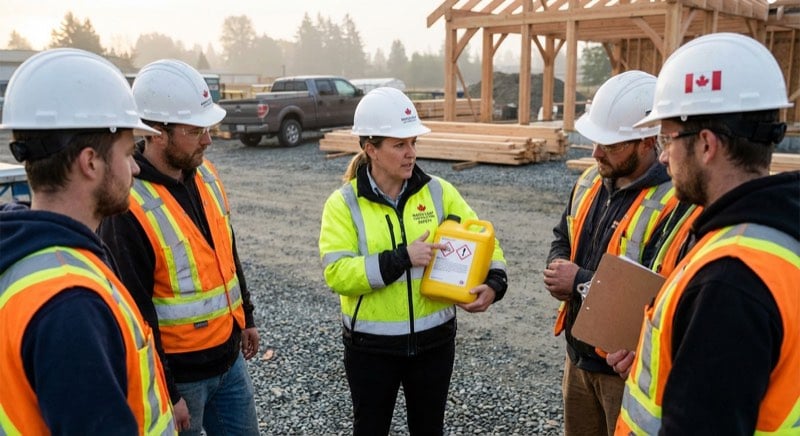
- Workplace-specific training (delivered by the employer or a competent person): walk your crew through the actual products on your site. Show them the real labels. Point out the pictograms on the products they touch every day. Review the SDSs for your most commonly used chemicals.
- Refresher training (annually or when new products/hazards are introduced): WHMIS isn't a one-and-done certification. When new products arrive on site, your crew needs to be trained on them before they handle them.
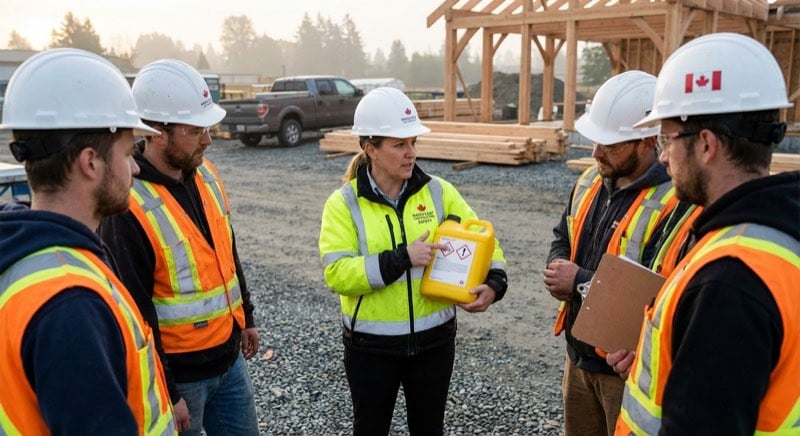
- Toolbox talks: run a 5-minute toolbox talk on WHMIS pictograms once a quarter. Grab a container, show the label, and quiz the crew. It takes 5 minutes and it sticks better than any online module.
If you need ready-made toolbox talk content, download our free toolbox talk package with 50+ topics, including chemical safety. And if your onboarding process doesn't include WHMIS training for new hires, grab our free orientation and onboarding package to close that gap.
The Pictogram Mistake That Costs Contractors the Most
We see this on site constantly: a crew member looks at the Health Hazard pictogram (the silhouette of a person with a star-shaped burst on their chest) and mistakes it for "general caution." They treat it like the Exclamation Mark. They might wear gloves, maybe not. No respirator. No engineering controls.
That pictogram doesn't mean "caution." It means the product can cause cancer, genetic damage, reproductive harm, or organ failure from repeated exposure. The long-term health effects are catastrophic, and by the time symptoms appear, the damage is done.
A 12-person drywall crew in Alberta was using a joint compound containing crystalline silica without respiratory protection because "it didn't have the skull and crossbones on it." They were right: it didn't. It had the Health Hazard pictogram, which nobody on the crew could identify. The safety coordinator caught it during a site walk, but not before three months of unprotected exposure.
This is the kind of gap that doesn't show up until it's too late. If your crew can't tell the difference between these two pictograms, every day they handle those products is a day of unmanaged risk.
Safety Evolution builds audit-ready safety programs that close exactly these kinds of gaps. We review your chemical inventory, verify your WHMIS training meets the workplace-specific requirement, and make sure your crew actually knows what they're handling. Book your free safety assessment and we'll show you where the holes are in 30 minutes.
Want Expert Eyes on Your Safety Program?
Book a free 30-minute assessment with a safety consultant. You’ll get a 90-day action plan — whether you work with us or not.
Get Your Free Assessment →
Frequently Asked Questions About WHMIS Pictograms
How many WHMIS pictograms are there?
There are 10 WHMIS pictograms in total. Nine use the red diamond-shaped border from the Globally Harmonized System (GHS): Flame, Flame Over Circle, Gas Cylinder, Corrosion, Exploding Bomb, Skull and Crossbones, Health Hazard, Exclamation Mark, and Environment. The tenth is the Biohazardous Infectious Materials pictogram, which uses a round black border and is unique to Canada.
What is the difference between the skull and crossbones and the health hazard pictogram?
The skull and crossbones indicates acute toxicity, meaning the product can cause death or serious harm from a single or short-term exposure (swallowing, skin contact, or inhalation). The health hazard pictogram (person with a star burst on their chest) indicates chronic or serious long-term health effects, including cancer, genetic damage, reproductive harm, organ damage, or respiratory sensitization. Both are dangerous, but the response and PPE requirements are different.
Are WHMIS pictograms required on workplace labels?
WHMIS pictograms are mandatory on supplier labels. For workplace labels (used when products are transferred to secondary containers), the minimum requirements are the product name, safe handling information, and a reference to the SDS. Pictograms are not legally required on workplace labels, but many employers include them as a best practice to improve hazard communication.
What changed in WHMIS after the December 2022 amendments?
The December 2022 amendments to the Hazardous Products Regulations introduced a new hazard class called "Chemicals Under Pressure" (which uses both the Flame and Gas Cylinder pictograms) and updated the flammable gases classification with new subcategories (1A, 1B, and 2). The transition period for suppliers ended December 14, 2025, so all labels and SDSs should now reflect these changes.
Do all hazardous products have WHMIS pictograms?
No. Some WHMIS hazard classes and categories do not require a pictogram, including Aerosols Category 3, Flammable Gases Category 2, Flammable Liquids Category 4, Combustible Dusts, and Simple Asphyxiants. These products are still hazardous, but their labels communicate the risk through signal words, hazard statements, and precautionary statements instead of pictograms.
How often do workers need WHMIS pictogram training?
Workers need WHMIS training when they are first hired, when new hazardous products are introduced to the workplace, and when conditions change. Most provinces recommend annual refresher training as best practice. Employers are also required to provide workplace-specific training on the actual products used at their sites, in addition to generic WHMIS education.