Last updated: April 2026
⚡ Quick Answer
- Summary: The 18 winter toolbox talk topics below cover the most common cold-weather hazards on construction and industrial jobsites, including cold stress, frostbite, hypothermia, slips and falls on ice, winter driving, snowplow safety, and ice storm preparation. Deliver one per day or per week throughout the winter season to keep your crew safe and aware.
- Free resource: Download our free cold-weather toolbox talks package to keep crews prepared for winter hazards.
Winter changes everything on a jobsite. Icy surfaces, freezing temperatures, reduced daylight, blowing snow, and windchill all increase the risk of injuries for construction and industrial workers. Standard safety practices still apply, but winter adds a layer of hazards that crews need to prepare for specifically.
The best way to keep your team safe during winter is to deliver short, focused toolbox talks on winter-specific risks. One topic per day or per week, delivered at the start of shift, takes less than ten minutes and can prevent serious injuries.
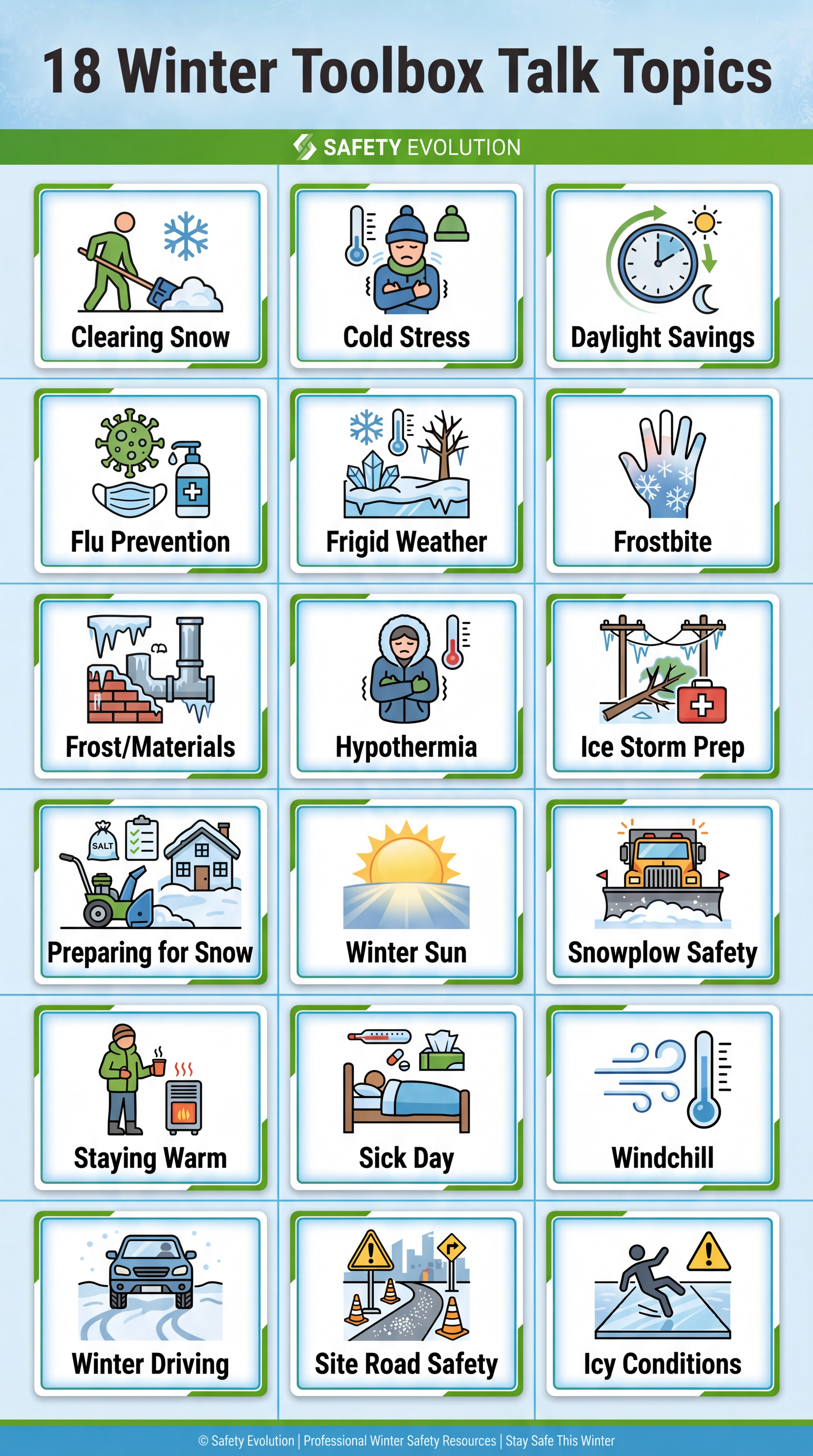
Below are 18 winter toolbox talk topics you can use throughout the season. Each one includes a description you can read aloud or use as a starting point for discussion at your next safety meeting.
Why Winter Toolbox Talks Matter
Winter conditions create higher-risk environments in several ways:
- Ice and snow make walkways, scaffolding, ladders, and vehicle surfaces dangerously slippery.
- Cold temperatures cause hypothermia, frostbite, and reduced dexterity that makes tool use more hazardous.
- Reduced daylight means more work happens in dim or dark conditions, increasing the chance of trips, falls, and struck-by incidents.
- Winter storms can develop rapidly, creating whiteout conditions, power outages, and dangerous commutes.
- Windchill accelerates heat loss from exposed skin, making frostbite possible even at relatively moderate temperatures.
Regular toolbox talks focused on these hazards keep your crew aware and prepared. Short, daily safety conversations lead to measurable reductions in winter-related incidents.
Need Ready-to-Run Talks for 18 Winter?
Download ready-to-use toolbox talks with scripts and sign-in sheets so supervisors can run consistent weekly talks without scrambling.
Download Free Cold-Weather Toolbox Talks →
18 Winter Toolbox Talk Topics
Each topic below includes a brief description with key points to cover. Use them as talking points at the start of your shift, or expand on the ones most relevant to your crew and worksite.
1. Clearing Snow Safely
Snow accumulation on walkways, stairs, scaffolding, and work surfaces creates slip and fall hazards across the entire site. This talk covers safe snow removal techniques, including proper use of shovels, snow blowers, and ice melt products. Key points: use ergonomic shoveling techniques to prevent back injuries, wear slip-resistant footwear, clear snow before it compacts into ice, and never use compressed air to blow snow off elevated surfaces where it could hit workers below. Assign snow clearing as a scheduled task rather than leaving it to chance.
2. Cold Stress Prevention
Cold stress happens when the body loses heat faster than it can produce it. This talk covers the three stages of cold stress: mild (shivering, numbness), moderate (confusion, slurred speech, loss of coordination), and severe (loss of consciousness, dangerously low body temperature). Prevention includes wearing proper layers, taking regular warm-up breaks, drinking warm fluids, and using a buddy system where coworkers check each other for symptoms. For a detailed guide, see our full article on working in extreme heat or cold.
3. Daylight Saving Time Safety
The time change in fall means darker mornings and less daylight during work hours. This talk addresses the fatigue and adjustment period that follow the time change. Remind workers to adjust sleep schedules gradually, use extra caution during the first week after the change, and be aware that darkness increases the risk of vehicle-pedestrian incidents during the morning commute and at the end of shift.
4. Flu Prevention on the Jobsite
Influenza and other respiratory illnesses spread more easily in winter when workers share confined break spaces and heated trailers. This talk covers practical prevention: get vaccinated, stay home when sick, wash hands frequently, cover coughs and sneezes, and avoid sharing water bottles or drinking cups. A flu outbreak on a small crew can shut down operations for a week or more.
5. Frigid Weather Safety
When temperatures drop well below freezing, the risks on a jobsite multiply. This talk covers the combined effects of extreme cold, wind, and moisture on the body. Key points: proper layering with moisture-wicking base layers, insulating mid layers, and windproof outer shells. Moisture management is critical because wet clothing accelerates heat loss. Workers should change out of damp clothing immediately and rotate into warm areas on a set schedule.
6. Frostbite Recognition and First Aid
Frostbite damages skin and underlying tissue when exposed to freezing temperatures. This talk teaches workers to recognize the warning signs: numbness or tingling, white or grayish skin patches, skin that feels unusually hard or waxy, and burning or stinging sensations. First aid includes moving the person to a warm area, immersing affected areas in warm (not hot) water, and never rubbing frostbitten skin. Emphasize that frostbite can occur in under 30 minutes at a windchill of minus 28 Celsius.
7. Frost Safety for Materials and Equipment
Cold temperatures affect more than people. Concrete does not cure properly below certain temperatures. Adhesives, sealants, and coatings may fail if applied in freezing conditions. Hydraulic fluid thickens, batteries lose capacity, and metal becomes more brittle. This talk covers how to protect materials from frost damage, proper storage and heating requirements, and pre-shift equipment inspections to catch cold-related issues before they cause failures or injuries.
8. Hypothermia Awareness
Hypothermia is a medical emergency that can develop even at temperatures above freezing if a worker is wet, exposed to wind, or working for extended periods without warming up. This talk covers symptoms (progressive shivering that suddenly stops, confusion, stumbling, slurred speech), first aid (remove wet clothing, apply warm blankets, offer warm fluids if conscious), and prevention (limit exposure time, enforce break schedules, provide heated break areas). Every worker on site should know how to recognize hypothermia in a coworker.
9. Ice Storm Preparation
Ice storms can develop quickly and create extremely dangerous conditions. This talk covers emergency preparedness for ice events: secure loose materials and tarps that could become projectiles, check that communication devices are charged and working, know the site evacuation plan, monitor weather alerts throughout the day, and establish clear criteria for when work must stop. Downed power lines during ice storms are a lethal hazard. Workers should never approach them.
10. Preparing for Snow
Before a forecasted snowfall, proactive preparation reduces hazards significantly. This talk covers pre-storm actions: clear walkways and access points, stage shovels, salt, and sand at key locations, inspect snow removal equipment, check that all workers have appropriate cold-weather PPE, assess snow load risks on roofs and scaffolding, and confirm that emergency heating equipment is functioning. Preparation takes less time than reacting to hazards after the storm.
11. Protection from the Winter Sun
UV exposure does not stop in winter. Snow reflects up to 80 percent of UV radiation, which means workers can receive UV exposure from above and below. This talk reminds crews to wear sunscreen (SPF 30 or higher), use UV-blocking sunglasses or safety glasses with UV protection, and be especially careful when working around large expanses of snow or ice that act as reflective surfaces.
12. Snowplow Safety
Workers operating snowplows or working near them face specific hazards: blind spots, reduced visibility, flying debris, and the unpredictable movement of the plow blade. This talk covers pre-operation equipment inspections, maintaining safe distances from snowplows, staying visible with hi-vis clothing, and being aware that snowplow operators have limited visibility to the sides and rear.
13. Staying Warm on the Jobsite
Proper warmth is not just a comfort issue. It is a safety issue. Cold workers have reduced dexterity, slower reaction times, and impaired judgment. This talk covers practical strategies: layering clothing (base, mid, outer), choosing insulated and windproof gloves and boots, wearing a toque or balaclava to reduce heat loss from the head, taking frequent warm-up breaks in a heated area, and rotating physically demanding tasks so no one worker is exposed to the cold for the entire shift.
14. When to Take a Sick Day
During winter, the pressure to show up even when feeling unwell is real. This talk normalizes staying home when genuinely ill. A sick worker on site is less productive, more likely to have an incident, and can spread illness to the rest of the crew. Supervisors should encourage honest reporting of symptoms and have a plan for covering shifts when someone calls in sick. One person staying home prevents the whole crew from going down.
15. Windchill Safety
Windchill makes the effective temperature much colder than the actual air temperature. This talk explains how to read windchill charts from Environment Canada or NOAA, what the risk thresholds are (frostbite in 30 minutes, 10 minutes, or 5 minutes depending on windchill), and how to adjust work and rest schedules accordingly. When windchill is severe, limit exposed skin time, increase break frequency, and consider postponing non-critical outdoor work.
16. Winter Driving Safety
Many construction workers drive to jobsites on winter roads. This talk covers vehicle preparation: check tires (winter tires recommended in many jurisdictions), top up fluids including washer fluid, clear all snow and ice from mirrors, lights, windows, and the roof before driving. Driving tips: increase following distance, reduce speed, avoid sudden braking or steering, and never pass a snowplow. If conditions deteriorate, pull over and wait. Getting there late is better than not getting there at all.
17. Winter Road Safety on Site
Jobsite roads, ramps, and parking areas become hazardous in winter. This talk covers keeping vehicle paths clear of snow and ice, adding signage and barriers at blind corners where visibility is reduced, maintaining lighting along site access routes, and establishing speed limits appropriate for winter conditions. Pedestrian and vehicle separation becomes even more important when workers may slip or vehicles may not stop as quickly on icy surfaces.
18. Working in Icy Conditions
Ice is one of the most common causes of winter workplace injuries. This talk covers practical prevention: wear boots with aggressive treads or add-on traction cleats, walk slowly with shorter steps, keep hands free for balance, report icy spots immediately, use salt or sand on walkways and stairs, and be especially cautious on metal surfaces (grating, truck beds, scaffolding) which become extremely slippery when wet or icy. For a full breakdown of winter PPE requirements, see our PPE guide.
How to Use These Toolbox Talks Effectively
Do not cover all 18 topics at once. Deliver one short, focused topic per day or per week throughout the winter season. This approach ensures:
- Better retention of each topic
- Stronger safety culture through consistent daily conversations
- Improved hazard awareness as conditions change throughout the season
- Reduced incidents during the highest-risk months
Match the topic to the conditions. If a cold snap is forecast, deliver the cold stress or hypothermia talk that morning. If snow is expected, cover snow preparation the day before. Relevance is what makes toolbox talks stick.
Document every talk: date, topic, presenter, and attendees. This is both a compliance requirement and a record that protects your company during audits.
Related Toolbox Talk Resources
These guides cover related topics that pair well with your winter safety program:
Related Winter Safety Toolbox Talks
Start Free and Get 52 Toolbox Talks Ready to Use
Start your 30-day free trial and get 52 toolbox talks ready to run, with scripts and attendance tracking your supervisors can use immediately.
Start Your 30-Day Free Trial →
Frequently Asked Questions
How often should winter toolbox talks be delivered?
Daily is ideal during the winter season. Deliver one short topic each morning at the start of shift. If daily talks are not feasible, aim for at least weekly, and increase to daily during periods of extreme cold, ice storms, or heavy snowfall. The 18 topics in this list can be rotated throughout the season.
What are the most important winter safety topics for construction?
The top priorities are cold stress prevention, slip and fall hazards on ice, hypothermia and frostbite recognition, winter driving safety, and proper cold-weather PPE. These cover the hazards most likely to cause serious injuries on a winter construction site.
At what temperature should outdoor work be stopped?
There is no universal temperature cutoff, as windchill, humidity, and the type of work all affect risk levels. However, when the windchill drops below minus 27 Celsius (minus 17 Fahrenheit), exposed skin can develop frostbite in under 30 minutes. At these levels, work should be limited to short periods with mandatory heated breaks, and non-critical outdoor tasks should be postponed.
Do winter toolbox talks count toward OSHA training requirements?
Documented toolbox talks serve as evidence that workers received safety information about specific hazards, which supports OSHA compliance. While OSHA does not mandate "toolbox talks" by name, the General Duty Clause requires employers to inform workers about recognized hazards. Regular, documented winter safety talks demonstrate due diligence.