Last updated: April 2026
⚡ Quick Answer
- Summary: A housekeeping toolbox talk covers how to keep your job site clean, organized, and free of hazards. Focus on walkway clearance, proper storage, spill cleanup, waste disposal, and daily tidying routines. Good housekeeping prevents slips, trips, falls, and fires. It is one of the simplest ways to reduce workplace incidents on any construction site.
- Free resource: Download our free 52 Construction Toolbox Talks PDF package to keep your talks relevant, fast, and consistent.
Housekeeping might not sound like an exciting toolbox talk topic. It does not carry the same urgency as fall protection or confined space entry. But poor housekeeping is a contributing factor in a significant percentage of workplace injuries every year. Cluttered walkways cause trips. Improperly stored materials fall. Spills create slip hazards. Blocked exits delay emergency response.
A well-run housekeeping toolbox talk reframes the conversation. It is not about making the site look pretty. It is about building habits that keep people safe and keep work moving. This guide walks you through exactly how to plan, deliver, and follow up on a housekeeping toolbox talk that sticks with your crew.
Why Housekeeping Matters More Than You Think
On a construction site, disorder creates danger. When tools, materials, cords, and waste pile up, workers have to navigate around hazards instead of focusing on their tasks. That slows production, increases fatigue, and raises the chance of someone getting hurt.
Here is what poor housekeeping actually leads to:
- Slips, trips, and falls. These are consistently among the top causes of construction injuries. Debris on walkways, cords across paths, and wet surfaces are all housekeeping failures.
- Fires. Improperly stored flammable materials, oily rags left out, and combustible waste piles are fire starters. Good housekeeping removes the fuel.
- Struck-by incidents. Materials stacked too high or stored on unstable surfaces can fall and hit workers below.
- Delayed emergency response. Blocked exits, cluttered stairways, and obstructed fire extinguishers slow response times when seconds matter.
- Pest and health issues. Food waste and standing water attract pests and create unsanitary conditions.
OSHA's housekeeping standard (29 CFR 1926.25) specifically requires that scrap, debris, and waste materials be removed from work areas. Failing to do so is a citable violation. In Canada, provincial OHS regulations carry similar requirements. Housekeeping is not optional. It is a regulatory obligation.
Need Ready-to-Run Talks for How to Give a Housekeeping?
Download 52 toolbox talks with scripts and sign-in sheets so supervisors can run consistent weekly talks without scrambling.
Download the 52 Toolbox Talks PDF →How to Structure Your Housekeeping Toolbox Talk
A good toolbox talk is short, focused, and interactive. Aim for 10 to 15 minutes. Here is a structure that works well for a toolbox talk on housekeeping:
1. Open With a Real Example
Start by sharing an incident, near-miss, or observation from your own site. Something like: "Yesterday I noticed extension cords running across the main walkway near the south entrance. If someone trips and falls carrying a load, that is a serious injury waiting to happen." A real example from your site makes it personal and relevant. If you do not have one, use a recent OSHA incident report as a talking point.
2. Explain the Why
Do not assume your crew understands why housekeeping matters. Connect it directly to their safety. "When we keep our work areas clean, we spend less time dodging hazards and more time getting work done safely. Nobody wants to go home with an injury because someone left scrap lumber on the stairs."
3. Cover the Key Practices
Walk through the specific housekeeping actions that apply to your site. See the section below for a detailed checklist.
4. Invite Discussion
Ask your crew where they see housekeeping issues on site. What areas are hardest to keep clean? What gets in their way? This turns a lecture into a conversation and helps surface problems you might not have noticed.
5. Assign Responsibility
Struggling to keep toolbox talks relevant and consistent? free 52 Construction Toolbox Talks PDF package analyzes your safety records to surface the topics your crew actually needs to hear.
End by making it clear that housekeeping is everyone's responsibility, every day. Not just at the end of the shift. Not just when the inspector is coming.
The Housekeeping Checklist: What to Cover
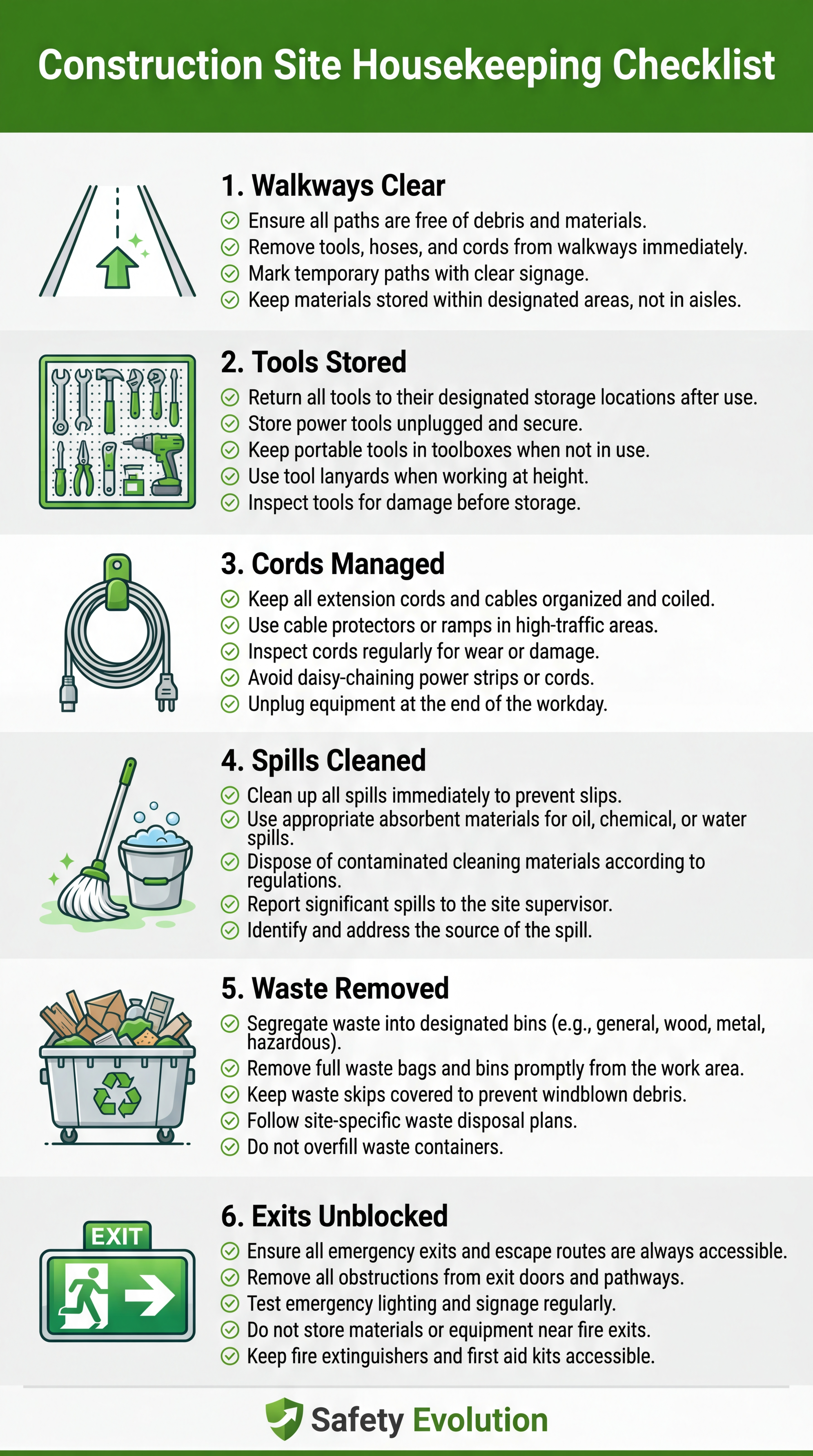
Use this list as the core of your toolbox talk. Focus on the items most relevant to your current site conditions.
Walkways and Access Routes
- Keep all walkways, corridors, and stairways clear of materials, tools, and debris at all times.
- Never block emergency exits, fire extinguisher locations, or electrical panels.
- Mark temporary obstructions with cones, barricades, or signage.
- Remove ice and snow promptly in winter months. For more on winter-specific hazards, see our guide on clearing snow safely on construction sites.
Tool and Material Storage
- Return tools to their designated storage area after each use. Do not leave them on the ground, on scaffolding, or on ledges where they could fall.
- Stack materials neatly and securely. Use chocks, straps, or racks to prevent shifting or toppling.
- Store sharp objects like nails, blades, and rebar caps properly. Remove or bend down protruding nails immediately.
Cord and Hose Management
- Route extension cords and air hoses out of walkways. Use cord covers or tape them overhead where possible.
- Inspect cords for damage before each use. Damaged cords are both a trip hazard and an electrical hazard.
- Coil and store cords at the end of each shift.
Spill and Waste Cleanup
- Clean up spills immediately. Oil, water, grease, and chemical spills create slip hazards and can be health risks.
- Use the correct cleanup materials for the type of spill. Chemical spills may require specific absorbents and PPE.
- Empty trash and waste bins regularly. Do not let them overflow.
- Separate and dispose of hazardous waste according to your site's waste management plan and local regulations.
Flammable Material Storage
- Store flammable liquids in approved, labeled containers and in designated storage areas away from ignition sources.
- Dispose of oily rags in metal containers with self-closing lids.
- Keep combustible materials like sawdust, paper, and cardboard from accumulating in work areas.
Lighting
- Make sure all work areas have adequate lighting before starting work. Poor lighting makes it harder to spot hazards.
- Replace burned-out bulbs and report lighting deficiencies promptly.
Sanitation
- Keep lunch and break areas clean. Dispose of food waste properly.
- Make sure portable toilets and handwashing stations are accessible, stocked, and maintained.
Making Housekeeping a Daily Habit
The biggest mistake crews make with housekeeping is treating it as a once-a-day task. A 15-minute cleanup at the end of the shift is not housekeeping. It is damage control.
Real housekeeping happens throughout the day. It is a mindset, not a chore. Here is how to build it into your crew's routine:
- Clean as you go. Put tools back when you are done with them. Pick up scrap as it is created. Wipe up spills the moment they happen. Small actions throughout the day prevent the big mess at the end.
- Five-minute rule. At the end of each task or before transitioning to a new work area, spend five minutes tidying the space. This prevents accumulation.
- End-of-shift sweep. Yes, you still do a final cleanup. But if the crew has been cleaning as they go, this should be quick, not a major operation.
- Lead by example. Supervisors and foremen who pick up debris and keep their own areas clean set the standard. Workers notice when leadership walks past a mess without addressing it.
Housekeeping Inspections and Accountability
A written housekeeping program gives your crew clear expectations. Pair it with regular inspections to keep standards from slipping.
What a Housekeeping Program Should Include
- Specific responsibilities for each trade or crew on site.
- Storage requirements for tools, materials, and hazardous substances.
- Waste disposal procedures and schedules.
- Inspection frequency and checklists.
- Consequences for repeated non-compliance.
Running Effective Inspections
Use a checklist-based inspection at least weekly. Walk the entire site and note any housekeeping deficiencies. Common items to check:
- Are walkways and exits clear?
- Are materials stored properly and securely?
- Are waste bins emptied and not overflowing?
- Are cords and hoses managed and out of walkways?
- Are flammable materials stored correctly?
- Are break areas clean?
Share inspection results with the crew. Recognize good performance and address deficiencies directly. When workers see that housekeeping is actually monitored and enforced, compliance improves fast.
Your safety data holds the answers. free 52 Construction Toolbox Talks PDF package gives your supervisors ready-to-use talks, sign-in sheets, and practical tracking templates for each week.
Common Housekeeping Mistakes on Construction Sites
Watch for these recurring issues. They come up on almost every site:
- Leaving scrap lumber with nails facing up. This is one of the most common causes of foot puncture injuries. Pull or bend nails immediately, or toss the lumber in the waste pile.
- Stacking materials too high. Overloaded pallets and tall stacks without securing are struck-by incidents waiting to happen.
- Letting the dumpster overflow. When the bin is full and waste starts piling around it, you have lost control. Schedule more frequent pickups if needed.
- Ignoring the laydown yard. Material staging areas can become disaster zones if not organized. Use designated zones, label them, and enforce order.
- Treating cleanup as someone else's job. Every worker on site creates mess. Every worker on site cleans it up. Period.
How Housekeeping Connects to Other Safety Topics
Housekeeping is not an isolated topic. It supports nearly every other safety practice on your site:
- PPE compliance. A clean, organized site makes it easier to access, store, and maintain personal protective equipment.
- Fire prevention. Proper housekeeping removes fuel sources and keeps fire suppression equipment accessible.
- Electrical safety. Managing cords and keeping water away from electrical panels reduces shock and fire risks.
- Slip, trip, and fall prevention. This is the most direct connection. Clean floors and clear walkways prevent the most common construction injuries.
- Emergency preparedness. When exits are clear and equipment is accessible, your crew can respond faster to any emergency.
For a full list of toolbox talk topics you can pair with housekeeping, check our toolbox talk topics page.
Stop guessing which safety topics matter most for your next toolbox talk. free 52 Construction Toolbox Talks PDF package uses your incident data to prioritize the training gaps that put your crew at risk.
Start Free and Get 52 Toolbox Talks Ready to Use
Start your 30-day free trial and get 52 toolbox talks ready to run, with scripts and attendance tracking your supervisors can use immediately.
Start Your 30-Day Free Trial →Frequently Asked Questions
What should a housekeeping toolbox talk cover?
A housekeeping toolbox talk should cover walkway clearance, tool and material storage, cord and hose management, spill cleanup, waste disposal, flammable material storage, lighting, and sanitation. Focus on the items most relevant to your current site conditions and use real examples from your project to keep the discussion practical.
How often should housekeeping inspections be done on a construction site?
Housekeeping inspections should be conducted at least weekly using a checklist. High-activity areas or sites with frequent material deliveries may need daily walkthroughs. Consistent inspections paired with corrective action tracking are the most effective way to maintain standards.
What are the most common housekeeping hazards on construction sites?
The most common housekeeping hazards include debris and scrap in walkways, unsecured or improperly stacked materials, extension cords across pathways, spills on walking surfaces, overflowing waste bins, blocked emergency exits, and protruding nails in scrap lumber. Each of these directly contributes to slips, trips, falls, and struck-by injuries.
Does OSHA require housekeeping on construction sites?
Yes. OSHA standard 29 CFR 1926.25 requires that debris, scrap, and waste materials be removed from work areas on construction sites. Failing to maintain clean and orderly conditions is a citable violation. Canadian provinces have similar requirements under their respective occupational health and safety regulations.
How do I get my crew to take housekeeping seriously?
Lead by example, connect housekeeping to personal safety outcomes, use regular inspections with real accountability, and make cleaning part of the daily routine rather than an end-of-shift chore. When supervisors consistently enforce standards and recognize good practices, crews adopt the habit faster.