Training
H2S Alive: Training Guide for Canadian Workers
H2S Alive costs $150-$250, takes one day, and lasts 3 years. Here's what to expect, who needs it, and how to choose a provider.
H2S Alive costs $150-$250 for 8 hours of hands-on training. H2S Awareness costs $25-$100 online. Here's how to pick the right one for your crew.
Last updated: March 2026
Your crew needs H2S training. You've seen two options everywhere: H2S Alive and H2S Awareness. One costs three times more than the other and takes a full day. The other is done online in a couple of hours.
Pick wrong and you've either wasted money on training your crew doesn't need, or worse, you've sent people into sour gas territory with nothing but a slide deck between them and a gas that can cause unconsciousness within one or two breaths at high concentrations. A 12-person pipeline crew in northern Alberta learned this the hard way when a subcontractor showed up with H2S Awareness certificates to a site that required H2S Alive. The whole crew was turned around at the gate. A full day of lost wages, travel, and a delayed schedule because someone didn't know the difference.
Here's how to make the right call.
H2S Alive is the industry-standard hydrogen sulfide safety training program in Canada, developed and administered by Energy Safety Canada. It is a full-day (approximately 8-hour), in-person course that combines classroom theory with hands-on practical exercises.
This is not a sit-and-click online course. By the end of the day, every participant has physically:
The course covers six core modules: H2S properties, health hazards and locations, hazard assessment and control, respiratory protective equipment, detection of H2S, and initial response strategy.
Certification requires a passing grade of 70% on the written exam plus successful completion of all practical demonstrations. The certificate is valid for three years. Government-issued photo ID is required, and all instruction and participation must be completed in English. If you're building out your crew's training and certification program, H2S Alive is one of the core tickets for anyone heading into the field.
For workers who already hold a valid (non-expired) H2S Alive certificate, Energy Safety Canada offers an H2S Alive Blended Renewal: an online theory exam followed by an in-person skills assessment. This renewal option costs less and takes less time than the full course, but is only available before the existing certificate expires.
If you want a deeper look at the full H2S Alive course, including where to take it and what to expect on exam day, see our H2S Alive training guide.
H2S Awareness training is a shorter, theory-focused course that teaches workers to recognize hydrogen sulfide hazards, understand health effects, and know basic emergency response procedures. Unlike H2S Alive, it does not include hands-on components.
H2S Awareness courses are offered by multiple providers across Canada, including the Canadian Red Cross, St. John Ambulance, and several online safety training companies. Course length varies from 1 to 4 hours depending on the provider.
A typical H2S Awareness course covers:
The critical difference: awareness training does not teach participants how to actually use an SCBA, perform a rescue drag, or operate gas detection equipment hands-on. It is an educational overview, not a competency-based skills course.
Costs typically range from $25 to $100, with some online providers offering courses for as little as $25. Most awareness certificates are valid for 3 years, though this varies by provider.
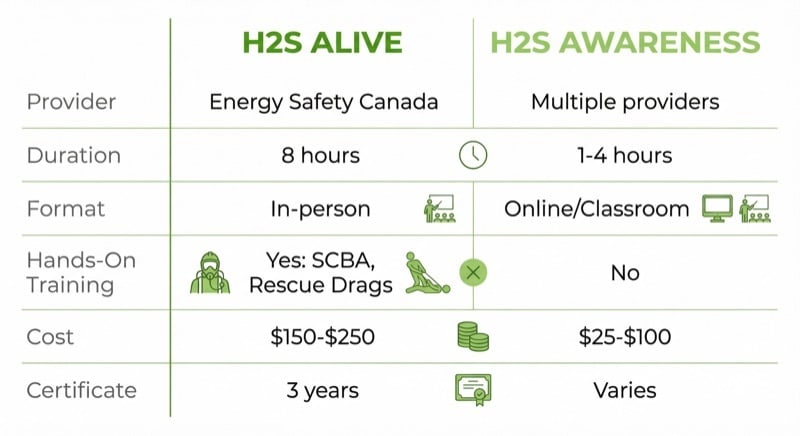
| H2S Alive | H2S Awareness | |
|---|---|---|
| Provider | Energy Safety Canada (through Authorized Training Providers) | Multiple providers (Red Cross, St. John Ambulance, online platforms) |
| Duration | ~8 hours (full day) | 1-4 hours |
| Format | In-person only (classroom + hands-on) | Online or in-person classroom |
| Hands-on training | Yes: SCBA, rescue drags, detector tubes | No |
| Cost | $150-$250 | $25-$100 |
| Certificate validity | 3 years | Varies (typically 3 years) |
| Renewal option | Blended Renewal (online theory + in-person skills) | Retake the course |
| Exam | Written (70% pass) + practical demonstration | Online quiz (varies by provider) |
| Best for | Workers directly exposed to H2S (oil & gas, pipelines, sour gas) | Workers with potential but lower-risk exposure (construction, wastewater, agriculture) |
Stop guessing what training your crew needs.
Easily build and assign training matrices by role. Start your 30-Day Free Trial and automate your training requirements.
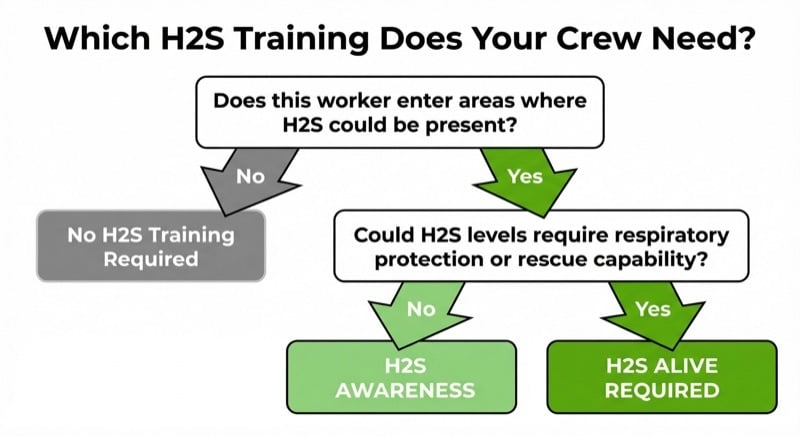
30-Day Free TrialIf your workers could be directly exposed to hydrogen sulfide at concentrations that require respiratory protection, they need H2S Alive. Full stop.
This includes:
For the full picture on why H2S is so dangerous and what your obligations are as an employer, see our H2S gas safety employer guide. Most employers in Alberta's oil and gas sector require H2S Alive as a minimum site access requirement. If you're bidding on work at any upstream oil and gas site, assume your field crew needs it. Showing up without valid H2S Alive certificates means your crew doesn't get past the gate.
The false belief: "My whole team needs H2S Alive, including the people who never leave the office." Not true. H2S Alive is specifically designed for workers who will physically be in H2S environments. Sending your accounting team through an 8-hour hands-on course is wasting their time and your money. Match the training to the exposure risk.
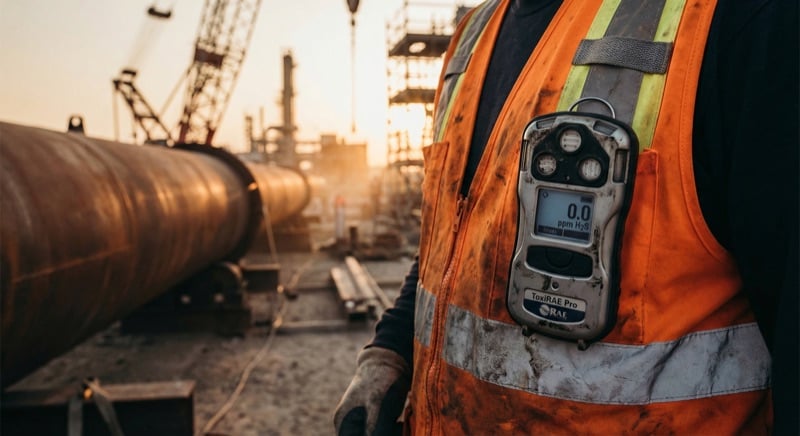
H2S Awareness is the right choice when workers need to understand the hazard but won't be performing rescue operations or using SCBA in the field.
This typically includes:
If your operation includes workers who need basic H2S awareness as part of their onboarding and orientation, build it into the process so it's completed before they ever set foot on site.
The key question for employers: does this worker's job require them to put on a breathing apparatus and perform a rescue if something goes wrong? If the answer is no, H2S Awareness covers their training obligation.
Here's the blunt truth: some employers send every single worker through H2S Alive because it's easier than doing a proper hazard assessment and figuring out who actually needs what. That might feel safer from a liability standpoint, but it costs three to five times more per person and takes a full day of productivity per worker. For a 20-person crew where only 12 people go into the field, that's 8 workers spending a full day on training they'll never use when awareness training would have covered them.
Do the hazard assessment first. Then assign training accordingly.
Both certifications expire, and the renewal process differs significantly.
H2S Alive Renewal: Energy Safety Canada offers the H2S Alive Blended Renewal for workers who hold a valid (not expired) certificate. The renewal combines an online theory exam with an in-person skills assessment at an Authorized Training Provider. Key details:
Important: if your H2S Alive certificate has already expired, you cannot use the blended renewal option. You must retake the full 8-hour course. This is a common and expensive mistake. Track your team's expiry dates. If you need help managing training records and expiry tracking, that's exactly the kind of thing a safety management system handles.
H2S Awareness Renewal: Most providers require you to simply retake the course. Since it's shorter and cheaper, renewal is straightforward. Some online providers offer automatic renewal reminders.
Let's get specific, because this is often the deciding factor.
H2S Alive: $150 to $250 per person, depending on the training provider and location. Providers in larger centres like Calgary and Edmonton tend to be at the lower end. Remote locations or private on-site courses cost more. The blended renewal runs $85-$125 per person.
H2S Awareness: $25 to $100 per person. Online courses are at the lower end. In-person classroom awareness training (like through the Red Cross or St. John Ambulance) runs closer to $50-$100.
Real math for a 15-person crew:
If every person takes H2S Alive at $200 each: $3,000 plus a full day of lost productivity (8 hours x 15 workers = 120 person-hours off the job).
If you assess your actual risk and send 10 field workers through H2S Alive ($2,000) and 5 office/support staff through H2S Awareness ($250): $2,250 total, and your 5 support staff are back at work in 2 hours instead of 8.
That's $750 saved in direct training costs and roughly 30 person-hours of productivity recovered. Over a 3-year certification cycle, those numbers compound.
The money you save by matching the right training to the right role doesn't make your crew less safe. It makes your training budget more precise, which lets you invest in training that actually matters for the workers who need it most. If you are not sure which workers need which level, Safety Evolution can run a training gap analysis specific to your operation.
Never let another H2S Alive ticket expire unnoticed.
Safety Evolution automatically warns you before worker certificates lapse. Start your 30-Day Free Trial to protect your compliance.
30-Day Free TrialNo. H2S Alive is an 8-hour, in-person course from Energy Safety Canada that includes hands-on training with breathing apparatus (SCBA), rescue drag techniques, and gas detection equipment. H2S Awareness is a shorter (1-4 hour) theory-based course from various providers that covers H2S hazards and safety procedures without hands-on components. H2S Alive is the industry standard for oil and gas workers, while H2S Awareness is designed for workers with lower exposure risk.
Not entirely. The initial H2S Alive certification must be completed in person because it requires hands-on demonstration of SCBA use, rescue drags, and gas detection equipment. However, the H2S Alive Blended Renewal (for workers with a valid, non-expired certificate) allows the theory component to be completed online, followed by an in-person skills assessment. H2S Awareness training, by contrast, can be completed fully online.
An H2S Alive certificate is valid for 3 years from the date of successful completion. Before the certificate expires, workers can renew through the H2S Alive Blended Renewal program (online theory exam plus in-person skills assessment). If the certificate has already expired, the full 8-hour in-person course must be retaken.
It depends on the site and your exposure risk. If you're working on a construction project near oil and gas operations, in sour gas areas, or in confined spaces where H2S could accumulate, H2S Alive is typically required. For general construction work where H2S exposure is unlikely or minimal, H2S Awareness training may be sufficient. Your employer's hazard assessment should determine which level of training is required for your specific role and worksite.
The H2S Alive Blended Renewal is a renewal option from Energy Safety Canada for workers who hold a valid (not expired) H2S Alive certificate. It combines an online theory exam with an in-person skills assessment at an Authorized Training Provider. Workers must complete the online component first, then complete the in-person assessment within 90 days of registration. The renewal costs approximately $85-$125, compared to $150-$250 for the full course. A 70% passing grade is required on the exam.
H2S Awareness training in Canada is offered by multiple providers, including the Canadian Red Cross (~$25 online), St. John Ambulance, Canada Safety Training, YOW Canada, Hard Hat Training, and various other online safety training platforms. Unlike H2S Alive (which is exclusively administered through Energy Safety Canada's Authorized Training Providers), H2S Awareness is not standardized under a single certifying body. Costs range from $25 to $100 depending on the provider and format.
Get Weekly Safety Insights
Regulation updates, toolbox talk ideas, and compliance tips. One email per week.
H2S Alive costs $150-$250, takes one day, and lasts 3 years. Here's what to expect, who needs it, and how to choose a provider.
Canadian H2S exposure limits by province: Alberta OEL, BC ceiling, ACGIH TLV. Full ppm chart with health effects at every level from odour to fatal.
H2S kills in seconds at high concentrations. Learn Canadian exposure limits, employer duties, and how to build an H2S safety plan.