Last updated: July 2026
If you are a safety manager on a construction site, one of the most dangerous assumptions you can make is that any worker holding a sling card is actually qualified to rig a load. Most crane accidents trace back to human error. Of those accidents, 80 percent happen because someone exceeded the capabilities of the crane or the rigging setup. OSHA Subpart CC makes it clear: a qualified rigger is required for assembly, disassembly, and any time a worker is in the fall zone hooking or unhooking a load. Yet OSHA does not require formal third-party certification for riggers. The standard is performance-based, and that ambiguity is exactly where sites get into trouble.
A qualified rigger is a worker who meets the criteria for a qualified person and has successfully demonstrated the ability to solve or resolve problems relating to the subject matter, the work, or the project, per 29 CFR 1926.1401. That single sentence is the anchor of your compliance program. Safety Evolution helps contractors keep qualification records and inspection logs organized and accessible, but the evaluation itself still has to happen on site. Everything else — inspections, documentation, and ongoing training — flows from that initial determination.
⚡ Quick Answer
- What: OSHA requires a qualified rigger during assembly/disassembly and whenever workers are in the fall zone hooking, unhooking, or guiding a load.
- Qualification: Demonstrated ability through training or experience, not necessarily a third-party card. Employer determines qualification.
- Penalties: Up to $161,323 per willful or repeated violation in 2026.
- Signal persons: Must be evaluated and documented, but employer-evaluated documentation is not portable to other employers.
What Qualifies as an OSHA Rigging Violation? (and What's at Stake)
Rigging violations are not paperwork problems. They are life-safety issues. According to OSHA and BLS data, crane-related struck-by incidents are a leading subset of the Fatal Four construction hazards. Roughly 90 percent of crane accidents are attributable to human error, and 80 percent of those errors stem from exceeding crane or rigging capabilities. The consequences include overturned loads, struck-by injuries, electrocutions from power line contact, and fatalities from structural collapse.
The financial stakes are just as real. In 2026, OSHA can issue penalties of up to $16,131 per serious or other-than-serious violation, and up to $161,323 per willful or repeated violation. Rigging citations are frequently classified as serious because the hazard is well-known and the standard is explicit. Willful classifications are applied when the employer knew about the requirement and chose not to comply.
Common citation categories include:
- Lack of a qualified rigger during assembly, disassembly, or load hooking
- Failure to inspect wire rope, slings, or hardware per required intervals
- Operating without a required signal person or with an unqualified signal person
- Exceeding rated capacity or working load limits
- Inadequate ground conditions for equipment setup
The One OSHA Rule That Governs Every Rigging Operation
The primary regulatory framework for crane and rigging operations in US construction is OSHA 29 CFR 1926 Subpart CC — Cranes and Derricks in Construction. This subpart covers the full lifecycle of crane use, including assembly, disassembly, operation, rigging, and signaling.
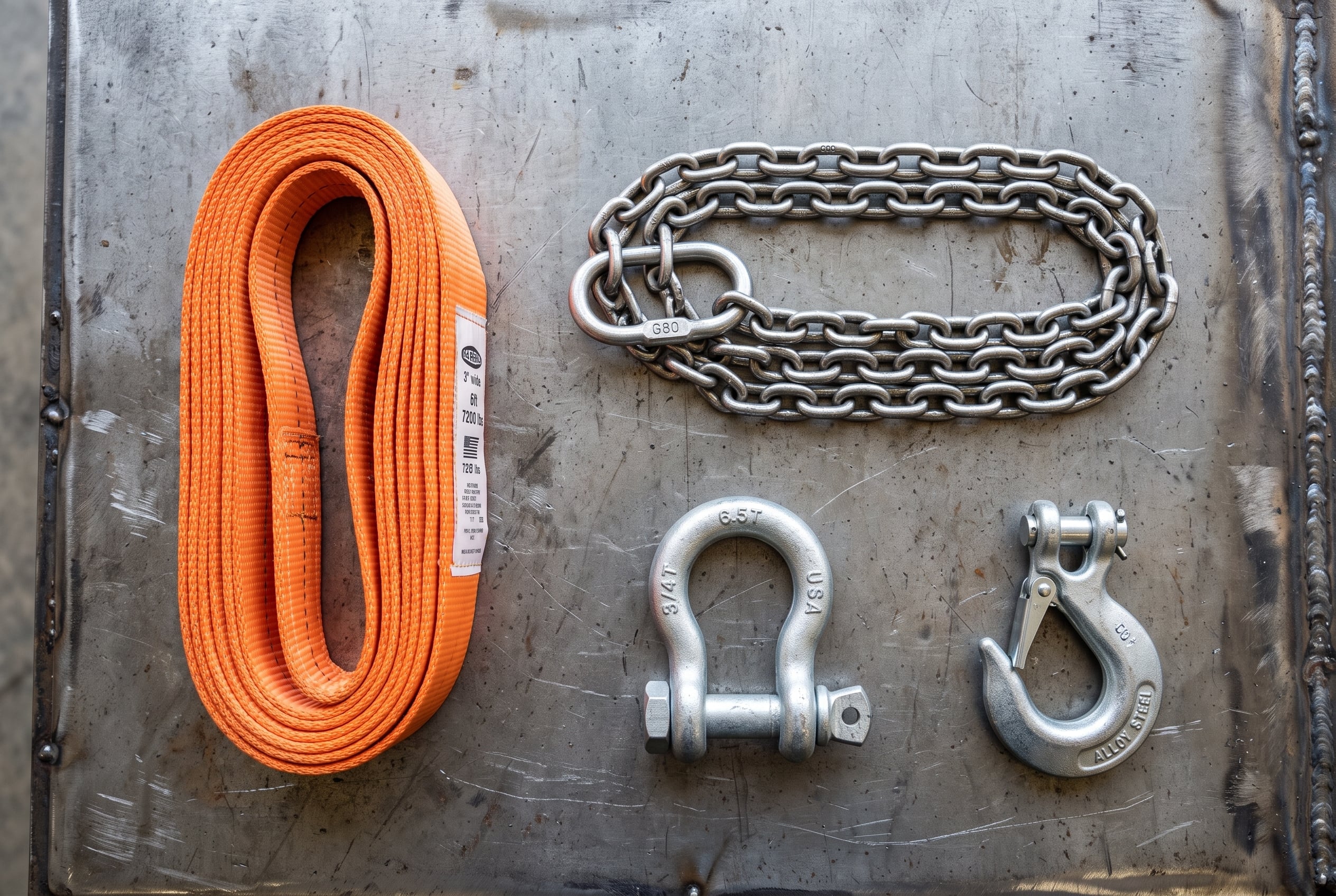
For rigging equipment specifically, 1926.251 sets the baseline requirements for slings, hardware, and rigging equipment used in material handling. It mandates working load limits, inspection intervals, and immediate removal from service when equipment is damaged. The ASME B30 series provides industry consensus standards that many employers follow, and OSHA indirectly references these through its qualification and inspection requirements.
Note on jurisdiction: These standards apply to US construction sites regulated by OSHA. Canada regulates lifting and rigging under CSA standards (such as CSA Z150) and provincial OHS codes. If you operate in Canada, the specific standards, certification paths, and enforcement bodies are different. This article covers US OSHA requirements only.
The Most Common Misconception: Certified Operator vs. Qualified Rigger
The single most frequent point of confusion on construction sites is the difference between a certified crane operator and a qualified rigger. The two are not interchangeable.
A certified crane operator must pass an accredited certification program overseen by an organization such as the National Commission for the Certification of Crane Operators (NCCCO) or another body recognized by OSHA under 1926.1427. Certification is mandatory. The operator must be certified for the specific type and capacity of equipment they operate.
A qualified rigger is governed by a different standard: 1926.1404(r). The qualified rigger must meet the definition of a qualified person in 1926.1401, which means they have demonstrated, through training or experience, the ability to solve problems related to the subject matter, the work, or the project. The standard is performance-based. A third-party certification is strong evidence of qualification, but it is not explicitly required by OSHA. An employer can qualify its own rigger, provided the employer can demonstrate the basis for that qualification if an inspector asks.
Here is the critical distinction: a certified operator may know how to swing a boom and read a load chart, but that does not mean the operator knows how to select the right sling angle, calculate a working load limit, or recognize a de-rated shackle. Those are rigger skills. If your site only checks the operator's certification card and skips the rigger's qualification file, you have a gap that OSHA can cite.
When Do You Actually Need a Qualified Rigger on Site?
OSHA 1926.1404(r) creates three specific trigger events. If any of these are happening on your site, a qualified rigger must be present:
- Assembly and disassembly work. 1926.1404(r)(1) is explicit. A qualified rigger is required when a crane or derrick is being assembled or disassembled. This includes attaching and removing boom sections, luffing jibs, and counterweights.
- Hooking, unhooking, or guiding a load when a worker is in the fall zone. 1926.1404(r)(2) covers any time a load is being connected or disconnected and a worker could be struck by a falling object. Even a small steel beam can kill someone at height.
- Initial connection of a load to a component or structure. This falls under the same provision as item two but deserves its own mention because it is easy to miss. If a rigger is tying in the first lift of the day, someone qualified must direct the connection.
What does not require a qualified rigger? Routine material handling that does not involve working near power lines, loads small enough to be handled manually without rigging equipment, or tasks where no worker is exposed to a struck-by hazard. When in doubt, err on the side of qualification.
Tired of chasing paper qualification cards across multiple job sites?
Tracking who is qualified for what, and whether their documentation is still valid, is a full-time job on its own. Try Safety Evolution free for 30 days and centralize your rigger and signal person records in one platform.
Start Your 30-Day Free Trial →
What Makes a Rigger "Qualified" Under 1926.1404(r)
The standard does not hand you a checklist, but it does define what a qualified person is: someone who, by possession of a recognized degree, certificate, or professional standing, or who by extensive knowledge, training, and experience, has successfully demonstrated the ability to solve or resolve problems relating to the subject matter, the work, or the project.
For rigging specifically, that means the person can do the following:
- Select rigging equipment appropriate for the load weight, shape, and center of gravity
- Calculate working load limits at various sling angles
- Identify damaged or defective slings, hooks, shackles, and hardware
- Understand the relationship between the load, the crane capacity chart, and the rigging configuration
- Recognize site-specific hazards, including power lines and unstable ground
Evidence of Qualification
OSHA does not require a specific certificate or card. What it does require is that the employer can demonstrate how the rigger became qualified. That evidence might include:
- Completion of a recognized rigging training program (such as NCCCO Rigger certification, Crosby, or qualified in-house training)
- Supervised on-the-job experience documented with dates and a sign-off from a competent person
- A practical evaluation where the rigger successfully rigged loads similar to those they will handle on your site
- Employer verification letter stating the basis for qualification
Written Proof and Ongoing Training
Keep the documentation at the site. If an OSHA compliance officer asks for proof that a rigger is qualified, handing them a training certificate from five years ago for a different type of work will not cut it. The proof must be relevant to the current project and must show the employer made an active determination.
Ongoing training is not a regulatory checkbox. It is risk management. Crews change, equipment changes, and lift plans evolve. A ringer who was qualified for steel erection last year may not have the task-specific knowledge to rig a modular HVAC unit this year.
The Assembly/Disassembly Director Rule Everyone Misses
1926.1404(a) states that assembly and disassembly must be directed by a person who meets the criteria for both a competent person and a qualified person, or by a competent person assisted by one or more qualified persons. If one person is doing both jobs, that person must be both competent and qualified.
This is not optional. Many contractors assign their crane operator or site foreman to oversee A/D without checking whether that person has the technical knowledge to direct the rigging sequence. If the A/D director cannot recognize an overloaded configuration or a rigging point that is below the load's center of gravity, the crew is exposed.
Best practice: Document the A/D director's credentials separately from the rigger's qualification file. Show that they understand both the site hazards and the rigging mechanics.
Signal Person Rules Most Teams Get Wrong
Signal persons and riggers are not interchangeable. Under 1926.1428, a signal person must know the signal method, understand equipment limitations, and pass both an oral or written test and a practical test. The documentation must be available at the site while the signal person is employed.
Here is the trap: if your employer evaluates the signal person in-house, that documentation is not portable to another employer. 1926.1428(a)(2) is explicit on this point. If a signal person shows up with a card from a previous contractor, you cannot accept it unless it was issued by a third-party qualified evaluator.
Bottom line: Signal person cards are not universal. A rigger qualified under 1404(r) is not automatically qualified as a signal person under 1428. Check both boxes before the lift starts.
Sling and Hardware Inspection: What OSHA Actually Requires
1926.251 sets the baseline. Any rigging equipment found damaged or defective must be removed from service immediately. Do not patch a frayed wire rope sling and send it back out. The table below shows the most common removal criteria:
| Equipment Type |
Remove from Service If... |
| Wire rope sling |
Kinking, crushing, broken wires, birdcaging, heat damage, corrosion, or missing identification tag |
| Synthetic web sling |
Cuts, holes, tears, abrasion, melting, charring, or damaged stitching |
| Alloy steel chain sling |
Excessive wear, nicks, cracks, stretched links, or inadequate capacity markings |
| Shackles, hooks, rings |
Deformation, cracks, excessive wear, or incomplete latching on hooks |
Keep inspection records. If OSHA shows up, they will ask when the last inspection happened and who performed it. A checkbox on a daily log is better than a memory.
Power Lines and Ground Conditions: Life-Safety Hazards Before the Lift
Electrocution from power line contact is one of the most common fatal crane incidents. OSHA Table A in 1926.1408 defines minimum approach distances based on voltage. These distances apply to the crane, the load, and the rigging. A tagline in the wind can close a gap fast. If you are not sure of the voltage, you must treat the line as the highest possible voltage in the range or contact the utility owner for confirmation. De-energizing and grounding is the only way to eliminate the hazard.
| Voltage (Phase to Phase) |
Minimum Approach Distance |
| Up to 50 kV |
10 ft (3.05 m) |
| Over 50 kV to 200 kV |
15 ft (4.60 m) |
| Over 200 kV to 350 kV |
20 ft (6.10 m) |
| Over 350 kV |
Determined by the owner of the line or registered professional engineer |
Ground conditions matter too. Under 1926.1402, the ground must be firm, drained, and graded to support the equipment. Ground failure is an underexplored cause of rigging incidents. A crane that settles during a lift will change sling angles, redistribute load weight, and potentially overload the rigging. Rigging failure often starts with inadequate ground preparation, not bad technique.
How to Build a Rigging Qualification Program
Start with the lift plan. List the types of loads, the rigging configurations, and the equipment you will use. Then match each task to the rigger's documented ability. If no one on site has handled a tilt-up panel before, do not improvise. Bring in a qualified third-party rigger or run a task-specific training session before the lift.
Next, assign a competent person to oversee evaluations. This person must understand both the standard and the practical work. They should sign off on a checklist that covers:
- Understanding of working load limits and sling angles
- Ability to identify damaged equipment
- Knowledge of hand signals and voice commands
- Familiarity with site-specific hazards, including power lines and ground conditions
Finally, review the program quarterly. Jobs change, equipment changes, and crew turnover means your qualification records can go stale in a matter of months.
Four Compliance Gaps That Trigger OSHA Citations
Most rigging citations are not the result of dramatic failures. They are the result of small gaps that compound. Here are four gaps that appear on real OSHA inspection reports:
1. Assuming signal person documentation is portable across employers
If you hire a signal person who was evaluated by a previous employer, their paperwork is not valid on your site unless a third-party evaluator issued it. Verify before the first lift.
2. Failing to document rigger qualifications in a retrievable format
A verbal "yeah, he's good" is not documentation. OSHA will ask for written proof. Keep qualification records organized, dated, and task-specific. If you are managing this with paper logs in a truck cab, you are one rainy afternoon away from losing your documentation. Safety management software with mobile access lets you pull qualification records, inspection checklists, and site-specific hazard plans from any device. That is not a convenience. It is a compliance defense.
3. Skipping or inconsistently performing pre-use sling inspections
1926.251 requires a pre-use inspection before each shift or use. If crew members regularly skip this because they are in a hurry, you have a serious violation waiting to happen.
4. Inadequate ground condition assessment before crane setup
Soft soil, overhead fill, or inadequate cribbing can destabilize a crane mid-lift. A ground condition assessment under 1926.1402 must be completed and documented before the crane is positioned.
One inspection away from a six-figure fine?
Rigging violations add up fast, and the documentation gaps that trigger them are easy to fix before the inspector arrives. Start your 30-Day Free Trial and see how Safety Evolution keeps your qualification records, inspection logs, and lift plans organized and audit-ready.
Start Your 30-Day Free Trial →
Frequently Asked Questions
Does OSHA require riggers to be certified?
No. OSHA 1926.1404(r) requires riggers to be qualified, not certified. The employer determines qualification based on the rigger's demonstrated ability to solve rigging problems. Third-party certification is allowed and useful as evidence, but it is not federally mandated.
What is the difference between a qualified rigger and a certified operator?
A certified crane operator is required under OSHA 1926.1427 and must pass an accredited certification program. A qualified rigger is required under 1926.1404(r) and is determined by the employer based on training or experience relevant to the specific task. One does not replace the other.
How often must rigging equipment be inspected?
Rigging equipment must be inspected before each use under 1926.251. If damage is found, the equipment must be removed from service immediately. Periodic documented inspections are a best practice, though the regulation focuses on pre-use checks by the person using the equipment.
Is signal person documentation portable between employers?
Only if the signal person was evaluated by a third-party qualified evaluator. If the employer conducted the evaluation, the documentation is not portable to another employer under 1926.1428(a)(2).
What are the OSHA penalties for rigging violations in 2026?
In 2026, OSHA can issue penalties of up to $16,131 per serious or other-than-serious violation, and up to $161,323 per willful or repeated violation. Lack of a qualified rigger or failure to inspect rigging equipment are common serious violations.
What is the minimum safe distance from power lines for cranes?
OSHA 1926.1408 Table A sets minimum approach distances based on voltage. For lines up to 50 kV, the minimum is 10 feet. For over 50 kV to 200 kV, it is 15 feet. For over 200 kV to 350 kV, it is 20 feet. For voltages over 350 kV, the distance must be determined by the owner of the line or a registered professional engineer. If the voltage is unknown, you must assume the highest possible voltage or confirm with the utility owner.
Get Weekly Safety Insights
Regulation updates, toolbox talk ideas, and compliance tips. One email per week.